


Sanitary bins are one of those essentials people only notice when they’re missing. While they aren’t the most glamorous of workplace products, they help maintain dignity and hygiene, while giving a pleasant washroom/bathroom experience for everyone who walks through your doors.

Many organisations only think about sanitary bins when something goes wrong. A toilet gets blocked. Offensive waste ends up in a normal waste bin. Employees or visitors complain about a lack of facilities or an overflowing sanitary bin. But when they are managed properly, sanitary bins are cost-effective and help keep your washrooms running smoothly and avoid problems.
In the UK, employers must provide “suitable and sufficient” sanitary conveniences and disposal facilities under the Workplace (Health, Safety and Welfare) Regulations 1992. These regulations apply to almost every workplace.
There’s also the Environmental Protection Act 1990, which places a legal Duty of Care on businesses to manage and dispose of waste safely from the moment it’s produced until final disposal. That includes sanitary waste, and it must be handled by a licensed waste carrier.
And finally, have you seen the ‘do not flush’ warning on sanitary products? That’s there for a good reason. The Water Industry Act 1991 makes it an offence to discharge anything into the sewer that could cause a blockage. This includes things like sanitary pads, tampons and wipes, which can block sewers and cause the formation of those disgusting fatbergs you’ve probably read about.
Despite all this, many organisations still aren’t fully aware of what counts as sanitary waste, what type of sanitary bins they need, or how often they should be serviced. Others rely on domestic bathroom bins, which don’t meet legal requirements and can create hygiene risks for staff and visitors.
This guide breaks down everything you need to know about sanitary bins, from what the law says to all the other practicalities. Whether you’re reviewing your current setup or starting from scratch, we want to give you some straightforward advice.
Quick Navigation
- What sanitary bins are and why they matter,
- What UK law requires of you,
- How to choose the right bins and service provider,
- What you can do to stay compliant without overspending,
- How to create washrooms that feel clean, safe, and respectful for everyone.
What Exactly Is a Sanitary Bin?
A sanitary bin is a purpose-designed container for the safe, hygienic disposal of sanitary waste. This includes items such as:
-
Menstrual pads
-
Tampons
-
Tampon applicators
-
Incontinence pads
-
Non-infectious absorbent hygiene products (items like wipes and cotton wool pads)
These items are classed as ‘offensive waste’, meaning they look or smell unpleasant, but they’re not infectious.
Why does sanitary waste need its own bin?
A proper sanitary bin prevents:
-
Blocked toilets and costly plumbing issues – when there’s no bin, people are far more likely to flush products, leading to blockages, sewer damage, and expensive call-outs.
-
Unpleasant odours and a poor washroom experience – sanitary products in open or general waste bins can quickly start to smell, especially in busy or warm environments.
-
Hygiene risks and contaminated waste – without a dedicated bin, used products can end up in the wrong place, increasing the risk of contact with bodily fluids and creating extra work for cleaning teams.
How sanitary bins differ from ordinary bathroom bins
A domestic bathroom bin isn’t suitable for sanitary waste in a workplace or public setting. Sanitary bins are specifically designed to:
-
Contain odours using liners, gels, or antimicrobial technology
-
Prevent contact with waste (e.g., pedal-operated or automatic lids)
-
Keep waste secure until a licensed carrier collects it
-
Meet UK waste classification rules
-
Support dignity and privacy for users
They’re also built to withstand higher usage levels than a household bin.
What sanitary bins look like
Most sanitary bins in UK washrooms are:
-
Slimline and discreet
-
Placed beside the toilet
-
Pedal-operated or touch-free
-
Lined with a hygienic, sealed liner
-
Serviced regularly by a licensed waste carrier
Some are wall-mounted for accessibility or space-saving, while others are free-standing. In accessible toilets, bins must be positioned so they don’t obstruct wheelchair manoeuvring space.
How sanitary waste is classified in UK law
Sanitary waste is classed as controlled waste, and when it’s non-infectious, it’s known as ‘offensive waste’ under UK guidance.
As it’s controlled waste, there are regulations around:
-
How the waste must be stored
-
Who can collect it
-
How it must be transported
-
What documentation you need
Why sanitary bins matter for dignity and inclusion
However, providing sanitary bins isn’t solely about compliance. It’s about creating a washroom environment that feels respectful and inclusive for everyone.
A well-placed, well-maintained sanitary bin:
-
supports menstrual dignity
-
reduces embarrassment for users
-
improves the overall washroom experience
-
shows staff and visitors that your organisation cares about hygiene and wellbeing
It’s also important to note that as more workplaces introduce gender‑neutral toilets, sanitary bins should be available in any cubicle where people may need to dispose of menstrual products.
The Law: UK Regulations You Must Follow
UK law requires employers to provide a suitable and hygienic way to dispose of sanitary waste in any toilet cubicle where menstrual products may be used. Here’s a breakdown of the laws that apply to sanitary bins in the UK.
Workplace (Health, Safety and Welfare) Regulations 1992
The Workplace Regulations 1992 requires employers to provide “suitable and sufficient sanitary conveniences” and “adequate means for disposing of sanitary dressings” in traditionally female-designated toilets, and by modern interpretation, in any toilet used by people who menstruate, including unisex and gender-neutral facilities.
What this means in practice:
-
Every cubicle used by menstruating people must have a sanitary bin.
-
Domestic bins are not considered suitable.
-
Bins must be kept clean and emptied regularly.
-
Facilities must be hygienic, private, and easy to use.
Environmental Protection Act 1990 - Duty of Care
The Environmental Protection Act (EPA) sets out the legal Duty of Care for all waste produced by businesses. Sanitary waste is included in this, and the law requires organisations to:
-
Store sanitary waste safely and securely,
-
Prevent it from causing harm or pollution,
-
Ensure a licensed waste carrier collects it,
-
Keep proper documentation (waste transfer notes),
-
Ensure waste is taken to a licensed disposal facility.
What this means in practice:
-
You cannot ask staff to empty sanitary bins into general waste.
-
You must use a licensed waste carrier (checkable via the Environment Agency).
-
You must keep waste transfer notes for two years.
-
You are legally responsible for the waste until final disposal — even after it leaves your site.
Water Industry Act 1991 - No flushing of sanitary products
The Water Industry Act makes it an offence to discharge anything into the sewer that could cause a blockage. Sanitary products are specifically included in this.
Why this matters:
If you don’t provide sanitary bins, people are far more likely to flush products, and that can lead to:
-
blocked toilets,
-
sewer damage,
-
environmental harm,
-
fines for improper disposal.
Controlled Waste (England and Wales) Regulations 2012
The Controlled Waste Regulations classify sanitary waste as offensive waste when it is non-infectious. This classification determines how the waste must be stored, transported, and disposed of.
What this means in practice:
-
Sanitary waste cannot go into general waste bins.
-
It must be placed in a suitable sanitary bin.
-
It must be collected by a licensed waste carrier.
-
It must be disposed of at a permitted facility.
Who Can Collect Sanitary Waste?
Under the Duty of Care, sanitary waste must be collected by a licensed waste carrier. You can check a provider’s licence using the Environment Agency’s public register.
In practice, this means you can’t legally dispose of sanitary waste yourself. Staff can’t take it home or slip it into the general waste bin either. Every collection must be backed by a proper waste transfer note, and those notes need to be kept on file for two years. These might seem like simple requirements, but organisations can fall foul of the law if they aren’t sure about the rules on how to handle sanitary waste.
Penalties Organisations Can Face
If you don’t provide sanitary bins or manage sanitary waste properly, the consequences can stack up quickly. Businesses can face unlimited fines under the Environmental Protection Act, enforcement action, and even prosecution for improper disposal. On top of that, there’s the reputational hit of getting waste management wrong, along with a very real risk of blocked drains and expensive repairs.
How Many Sanitary Bins Do You Need?
You don’t need to overthink this. The golden rule is to have enough sanitary bins for people to dispose of menstrual products and other hygiene products privately, hygienically, and without leaving the cubicle. UK law doesn’t require that you have a specific number of bins, but it does require disposal facilities to be suitable and sufficient. In practice, that means placing a bin in every cubicle where menstrual products may be used. It’s the simplest way to stay compliant.
In larger or busier washrooms, you might add a few extra bins in communal areas to help manage footfall, and remember that accessible toilets need a bin that doesn’t obstruct movement or transfer space. Some organisations also provide bins in male and gender‑neutral toilets to support users with incontinence products or anyone who menstruates.
If you’re not sure whether your current setup is actually ‘suitable and sufficient’, it’s worth getting a quick second opinion. We’re here to help.
What Types of Sanitary Bin Are There?
The right sanitary bin can make a washroom feel cleaner, more accessible, and more pleasant to use. And it makes managing your waste so much easier too. If you’ve ever shopped around for sanitary bins for your organisation, you’ll have seen that they come in a range of sizes, shapes, and with a range of features, all suited to different types of washrooms.
Floor‑Standing Sanitary Bins
These are the most common sanitary bins in UK washrooms. They’re designed to sit discreetly beside the toilet and are available in different capacities depending on your needs. They’re a popular choice because they’re:
- Easy to place in almost any cubicle-their slimline design fits in narrow spaces.
- Suitable for most workplaces and public washrooms
- Many have no‑touch mechanisms such as pedal‑operated lids or sensor‑activated openings, which helps keep things hygienic.
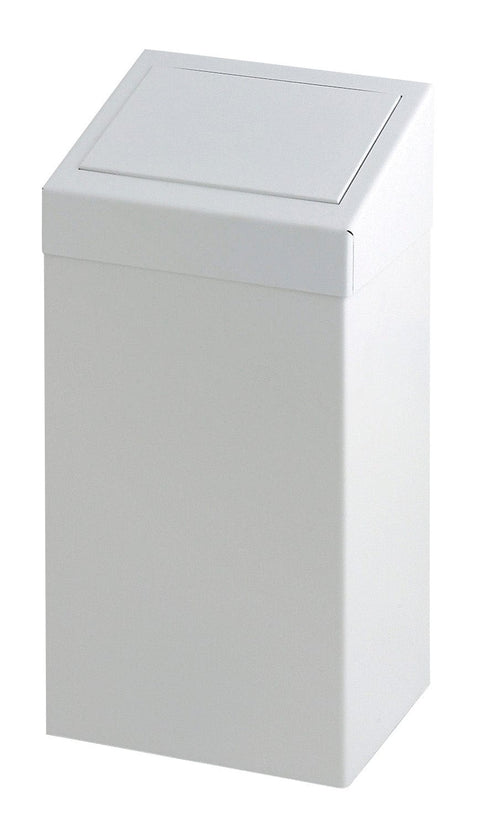
Product shown: Sanitary Push Lid Bin
Wall‑Mounted Sanitary Bins
Wall‑mounted sanitary bins are ideal for accessible toilets, compact cubicles, or washrooms where floor space is limited. These are a great choice in these areas because:
- It keeps the floor clear so wheelchair users can manoeuvre more easily.
- It’s easier for cleaning teams to mop underneath
- It reduces trip hazards in tight spaces
These bins often have a smaller capacity, so they’re best suited to lower‑traffic environments where sanitary bins are serviced regularly.
Pedal‑Operated Sanitary Bins
Pedal‑operated bins are one of the most hygienic options because users don’t need to touch the lid at all which helps prevent the spread of germs. These bins are widely used in busy UK workplaces and public buildings because they strike a good balance between hygiene, cost, and ease of use.
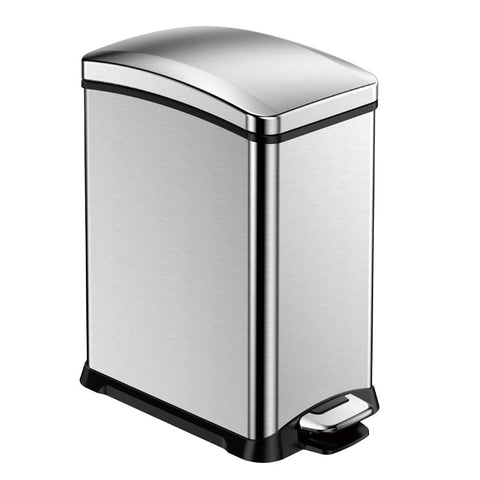
Product shown: Eko Rejoice Brushed Stainless Steel - 8 or 15 Litres
Sensor‑Activated (Touch‑Free) Sanitary Bins
Touch‑free bins use a motion sensor to open the lid automatically. They’re increasingly popular in modern washrooms, especially where organisations want to create a premium, hygienic, and fully touch‑free experience. These bins are an ideal choice for high-end hospitality venues, offices with modern washrooms, and non-clinical areas in healthcare settings.
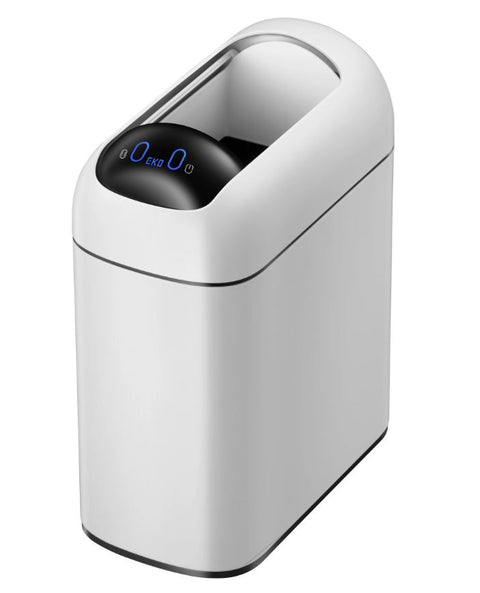
Product shown: Eko Astra Bathroom Sensor Bin
Compact Sanitary Bins for Small Cubicles
Some washrooms, especially those in older buildings, cafés, or transport hubs, have very tight cubicles. Compact sanitary bins are designed to fit into these awkward spaces without compromising usability.
These bins often have curved or angled edges to fit beside the toilet and are often wall‑mounted or designed to sit partly recessed into the wall, so they take up less space.
Large‑Capacity Sanitary Bins
In high‑traffic environments such as shopping centres, stadiums, schools, or transport hubs, larger bins help reduce overflow and keep washrooms tidy between services.
Bins with Antimicrobial or Odour‑Control Technology
Many modern sanitary bins include antimicrobial surfaces or odour‑control systems to keep washrooms smelling fresh and prevent germs from spreading. These bins will often have features like:
-
Antimicrobial coatings- surfaces are treated to slow the growth of bacteria, keeping the bin fresher for longer.
-
Sealed liners- bags close tightly to lock in waste and prevent leaks or odours escaping.
-
Odour‑neutralising gels or sachets- small inserts absorb and neutralise smells inside the bin.
-
Internal flaps to contain waste- these form a discreet barrier that keeps waste out of sight and helps stop odours escaping when the lid opens.
Eco‑Friendly and Recycled‑Material Sanitary Bins
Eco‑friendly sanitary bins are becoming a popular choice as more UK organisations look for practical ways to improve their sustainability credentials. These are often made from recycled plastics which helps businesses cut down on virgin materials and supports a circular economy. If you want extra sustainability brownie points, choose a waste provider that won’t just send your sanitary waste to a landfill. More waste companies are now sending sanitary waste to energy‑from‑waste plants, where it can be turned into useful heat or electricity rather than ending up on landfill sites. For example, Viridor has partnered with washroom services firm PHS Group, which will see non-recyclable customer waste treated and transformed into energy at recovery plants across the country.
Sanitary Waste Collection Options
So you’ve got the right sanitary bins in place. How do you get the waste collected safely, legally, and without any hassle? In the UK, sanitary waste needs to be handled carefully. But the good news is you have several straightforward options. Here’s a breakdown of how sanitary waste collection works, what your legal responsibilities are, and what to look for in a provider.
Why Sanitary Waste Needs Specialist Collection
Sanitary waste isn’t infectious, but it still needs careful handling because of hygiene and odour.
In practice, this means sanitary waste should be:
-
stored safely in a suitable sanitary bin,
-
collected by a licensed waste carrier,
-
transported in compliance with waste regulations,
-
accompanied by proper documentation,
-
disposed of at a permitted facility.
The Two Main Types of Sanitary Waste Collection Services
Across the UK, sanitary waste is typically collected in one of two ways:
1: On-Site Servicing (Bin Emptied on Your Premises)
A hygiene technician visits your site, empties the bin on-site, sanitises it, replaces the liner, and leaves the same bin in place.
Benefits of choosing this option:
-
Lower carbon footprint (no bin transport)
-
Bin stays in the same place which ensures it’s always accessible
-
Often more discreet
-
Reduced plastic use
2: Bin Exchange Service (Bin Swapped for a Clean One)
The technician removes the full bin and replaces it with a pre-sanitised, ready-to-use bin.
Benefits of choosing this option:
-
Fast and efficient
-
Ideal for high-traffic washrooms
-
Ensures bins are always fully sanitised
-
Good for sites with multiple washrooms

How Often Should Sanitary Bins Be Collected?
How often sanitary bins should be collected really depends on how busy your washrooms are. A small office with a handful of staff might only need a monthly visit, while places with heavy footfall like gyms, schools, or shopping centres often need weekly or even twice‑weekly servicing to keep everything fresh. The number of cubicles, the size of the bins, and even seasonal patterns can all make a difference, which is why most UK providers offer flexible bin servicing schedules.
What Happens During a Sanitary Waste Collection?
A sanitary waste collection is pretty straightforward. A licensed technician will arrive at your site on the agreed schedule to swap or refresh the bins depending on your service type, and ensures everything is properly cleaned and sanitised before they leave. The waste is then taken away by an authorised carrier and transported in line with UK regulations, so you know it’s being handled safely and legally. After each visit you’ll receive the right documentation, usually a Waste Transfer Note or an annual Duty of Care certificate confirming that your sanitary waste has been collected and processed compliantly.
What Do Sanitary Bin Services Typically Cost in the UK?
What you pay will depend mainly on how often your bins need emptying, the number of bins, and your location, with rural sites sometimes costing slightly more due to travel time. Touch‑free or antimicrobial bins may add a small premium, and longer contracts often come with better rates. Most reputable providers include everything you need in the headline price, but it’s still worth checking whether Duty of Care fees, bin rental, or admin charges are included, as these can sometimes end up being hidden extras. When comparing quotes from providers, make sure you’re looking at like‑for‑like services; whether the bin is included, how often it will be serviced, whether documentation is digital, and where the waste ultimately goes. A good provider will be transparent, flexible, and able to match your servicing to how your washrooms are actually used so you’re not overpaying.
How to Choose a Sanitary Bin Provider
Choosing the right sanitary bin provider isn’t just about price. The priority should be finding someone reliable, compliant, and easy to work with. The best providers feel almost invisible, keeping your washrooms clean, your paperwork sorted, and your waste handled properly without you ever needing to chase.
What to look for:
-
A valid waste carrier licence: this is non‑negotiable. You can check any provider on the Environment Agency register.
-
Clear, transparent pricing with no hidden extras.
-
Flexible servicing that matches your needs (weekly, fortnightly, monthly, or seasonal).
-
Proper documentation: Waste Transfer Notes and Duty of Care certificates should be provided as standard.
-
Sustainable disposal such as energy‑from‑waste, plus bins made from recycled materials where possible.
-
Good customer support and easy ways to get help when you need it.
-
Quality bins that are hygienic, discreet, and hands‑free.
-
Great reviews and reputation.
What Happens to Sanitary Waste After Collection?
This is something many businesses never think about, but it’s good to know what’s happening to your waste if you want to be known as a sustainable organisation.
Energy-from-Waste (EfW)
Many UK providers now divert sanitary waste away from landfill and send it to energy-from-waste facilities where it is safely incinerated and used to generate electricity and heat. EfW facilities produced over 9,600 GWh of electricity in 2023, enough to power 3 million homes.
Landfill (Less Common)
Landfill is no longer the default route for sanitary waste disposal in the UK, largely because it’s both environmentally damaging and increasingly expensive. Methane released from landfill is a major climate concern; this greenhouse gas is 28 times more potent than CO₂. On top of that, the UK’s Landfill Tax has continued to rise and now stands at £103.70 per tonne, making landfill one of the most expensive waste disposal options for businesses.
Recycling Innovations
In some parts of the UK, advanced recycling processes are being used for absorbent hygiene products, turning items like nappies, incontinence pads and sanitary products into new materials instead of sending them to landfill. In Wales, a third of local authorities collect these items separately and send them to specialist facilities where they are sterilised, separated, and recycled into useful products like cellulose fibre for packaging, spill‑absorbent materials, and components for noticeboards.
Sustainability & Environmental Impact
Sanitary waste collection is part of a much bigger environmental picture. Every pad, tampon, liner, or incontinence product has to go somewhere, and in the UK, that “somewhere” has changed a lot in recent years.
Landfill used to be the default destination for absorbent hygiene products but landfills release methane, a greenhouse gas that’s much more potent than CO₂. Today, the UK is moving towards energy-from-waste (EfW), using advanced recycling techniques to turn sanitary waste into energy. It’s a good move; EfW reduces greenhouse gas emissions by around 200 kg CO₂ per tonne of waste treated compared to landfill.
So how can your organisation reduce the environmental impact of sanitary waste?
1. Choose providers that divert waste from landfill
Many UK waste companies now send sanitary waste to EfW facilities. Ask your provider directly: “Where does our sanitary waste go?”
2. Use bins made from recycled materials
Some sanitary bins are now manufactured using recycled plastics, reducing their carbon footprint.
3. Encourage responsible product use
Simple signage (‘Please don’t flush sanitary products’) can significantly reduce blockages and call-outs.
4. Optimise how often your sanitary bins are serviced
Over-servicing increases carbon emissions from transport. Under-servicing leads to hygiene issues. Getting the balance right is more sustainable and cost-effective.
Common Mistakes Businesses Make
We know that even with the best intentions, many organisations slip up when it comes to sanitary bins and managing their sanitary waste. Here are the most common pitfalls and how to avoid them.
Not providing sanitary bins in every relevant toilet
One of the biggest mistakes is assuming that sanitary bins are only needed in “female” toilets. Modern workplaces are more diverse, and sanitary waste can be produced by:
-
Women
-
Trans men
-
Non-binary people
-
People with incontinence issues
Failing to provide bins in unisex or gender-neutral toilets can leave people without a private, hygienic way to dispose of products
Using domestic bins instead of proper sanitary bins
A domestic bathroom bin is not a sanitary bin. It doesn’t meet hygiene standards, doesn’t contain odours, and doesn’t comply with UK waste regulations. A proper sanitary bin is designed to contain waste safely and hygienically, and it’s a legal requirement for workplaces.
Letting bins overflow or under-servicing them
Overflowing sanitary bins lead to bad smells, hygiene risks, pest issues, and from staff or visitors. If your bins are regularly full before collection day, it’s a clear sign that your setup doesn’t meet your actual needs. You may need larger bins, a couple of extra units, or more frequent servicing.
Not using a licensed waste carrier
You’re responsible for making sure your waste is handled by a licensed provider. Using an unlicensed provider or trying to dispose of sanitary waste yourself can result in a fine or even prosecution.
Poor documentation or missing waste transfer notes
Many businesses don’t realise that sanitary waste collections must be documented. You must keep Waste Transfer Notes for two years or face potential fines of thousands of pounds. If your provider isn’t giving you proper paperwork, that’s a big red flag.
Not training cleaning or facilities staff
Cleaning and facilities teams often aren’t given the guidance they need on how the sanitary bins work, what to do if one’s damaged, how to spot when a bin is starting to overfill, or what documentation should arrive after each collection. This can mean problems get missed. Give new and existing staff a quick briefing so everyone knows their role in keeping washrooms clean, safe, and compliant. It’s important to know that if you outsource cleaning, responsibility still sits with you under Duty of Care.
Choosing the wrong type of bin for the space
Ever tried to squeeze a bulky bin into a tiny cubicle, placed a floor‑standing unit where it blocks wheelchair access, or installed lidless or manual‑lid bins in busy, hygiene‑sensitive areas? Oversights like this can create real frustration for users and make washrooms less accessible. A quick look at your layout is often all it takes to spot what’s not working and switch to bins that genuinely fit the space and the people using it.

The Future of Sanitary Waste
So, what does the future hold for the way we manage sanitary waste? Tech is playing a huge role, as it does in so many other areas of life, and it’s starting to do the heavy lifting to make managing your sanitary waste cleaner, greener, more efficient, and more intuitive.
One of the biggest developments is the rise of IoT‑enabled monitoring, where smart sensors track how full bins are in real time. This kind of technology can cut collection frequency by around 30% by sending alerts when bins actually need emptying rather than relying on set schedules. It means fewer unnecessary visits, fewer overflowing bins, and a more efficient service overall.
AI and automation are transforming how waste is managed too. AI‑driven systems are already improving waste categorisation, predicting maintenance needs, and optimising collection routes. For sanitary bins, this means smarter scheduling, more accurate reporting, and a service that automatically adapts to how your washrooms are actually used.
Sanitary Bins Checklist
Sanitary bins might feel like a small detail in your washrooms, but they make a big difference to how clean and welcoming your spaces feel. If you’re reviewing your current setup, here’s a simple checklist to guide you:
✔ Do you have one sanitary bin per cubicle in all relevant toilets?
✔ Are your bins hygienic, discreet, and easy to use?
✔ Is your waste collected by a licensed carrier?
✔ Do you receive Waste Transfer Notes and Duty of Care documentation?
✔ Is your servicing frequency appropriate for your footfall?
✔ Are your bins placed correctly in accessible toilets?
✔ Are you confident your provider is transparent, compliant, and sustainable?
Download our Sanitary Bins Checklist
If you can tick all of these, you’re in a great place. However, if not, now’s the perfect moment to make a few improvements.
If you’re ready to get your sanitary bins sorted once and for all, we’re happy to help. We’ll walk you through your options and help you choose a setup that’s compliant, hygienic, and right for your space.


