


Litter, litter everywhere…no, you aren’t imagining it. Over 90% of places in England are affected by litter. That means almost everywhere you go, you’ll see it; the plastic bottles on our roadsides, cigarette butts on pavements, and crisp packets in hedges. While it’s easy to dismiss litter as a nuisance, in reality, it’s a serious issue which has consequences for the environment, our communities, and our finances.

This guide looks at everything you need to know about littering in the UK, from why it happens to how we can prevent it, so you can better understand the problem and be part of the solution.
Quick Navigation
- What Is Littering?
- Why Is Littering a Problem?
- The True Cost of Litter in the UK
- Littering Laws and Fines in the UK
- Where Is Littering Worst in the UK?
- Why Do People Litter?
- How Long Does Litter Last?
- How Can We Prevent Littering?
- Innovative Ways to Prevent Littering
- Litter Picking: Does It Really Work?
- How Businesses Can Help Reduce Litter
What Is Littering?
Keep Britain Tidy defines littering as “The act of dropping, leaving or abandoning rubbish in public places such as streets, parks, beaches, or transport infrastructure rather than disposing of it in a bin.”
This includes dropping food wrappers, drinks containers, or cigarette butts, leaving rubbish behind in parks, beaches, or public transport areas, and throwing items from vehicles.
It’s important to distinguish littering from fly-tipping. Fly-tipping involves the illegal dumping of larger quantities of waste, such as household waste, bulky items, or old white goods. While these problems are different in scale, they both contribute to the UK’s persistent waste problem.
Why Is Littering a Problem?
Research shows that more than 26.8 million UK adults admit to littering in the past year. Here’s why it matters more than many people realise.
Environmental Impact
Most rubbish doesn’t break down easily. This is one of the biggest reasons why litter is bad for the environment. Plastic in particular can take hundreds of years to degrade. When it does, it breaks down into tiny plastic particles called microplastics that contaminate soil and waterways and find their way into the food chain.
Also, we can’t talk about environmental impact without talking about the impact of cigarette litter. It’s one of the most common forms of litter, and as you can probably imagine, one of the most harmful. Each discarded cigarette butt contains thousands of chemicals, including arsenic, lead, and nicotine, which leach into soil and waterways as the filter breaks down. And as for the filters themselves. Most are actually made of plastic fibres (cellulose acetate) and can take up to 10 years to degrade. During that time, they release microplastics and toxins that poison wildlife, contaminate water, and harm delicate ecosystems.
Impact on Wildlife
Every day, the RSPCA receives around 10 calls about animals injured or trapped by discarded rubbish. The kind of harm officers see includes animals getting tangled up in litter, choking, suffocation, cuts, and ingestion of plastics or food packaging.
The main causes are items we often don’t think twice about: plastic bags, can holders, balloons, elastic bands, fishing tackle, food containers, and even discarded vapes. Once these items end up in hedgerows, parks, waterways, and on roadsides, it puts wildlife at risk. What’s worse is that many injured animals are never found.
Social and Community Impact
Litter doesn’t just look awful; it affects how people feel about where they live. Keep Britain Tidy’s research found that 77% of people believe litter has got worse in recent years, and many notice it every single day in the areas where they live, walk, and work. When streets and green spaces are strewn with rubbish, it chips away at community pride, affects mental wellbeing, and creates a perception of neglect and rising crime, even when nothing else has changed.
The True Cost of Litter in the UK
Cleaning up litter in the UK is down to local authorities. For already cash-strapped councils, it’s an expensive and relentless task. UK councils spend around £957 million every year on street cleaning and litter removal. Even something as seemingly minor as chewing gum adds significantly to that total, costing around £7 million to clean up. This eye-watering sum is money that could otherwise be spent on the public services we all need and rely on like education, housing, community development, and social care.
The added pressure of fly-tipping
Fly-tipping increases that burden even further. In 2024-2025, local authorities in England dealt with 1.26 million incidents of illegally dumped waste. Unlike everyday litter, fly-tipping often requires specialist removal, making it more complex and expensive to deal with. Clearing larger-scale incidents costs £19.3 million, adding even more strain to stretched budgets.
Shifting the responsibility
However, the UK government has unveiled tough new measures to tackle the problem, introducing “clean‑up squads” that will force offenders to tidy up the places they’ve polluted. Instead of waiting for lengthy court cases, councils will be able to issue conditional cautions requiring fly‑tippers to carry out up to 20 hours of unpaid clean‑up work and even seize money directly from them to cover the costs. The aim is to make those responsible clean up and pay up, restore pride in local communities, and save taxpayers and landowners from footing the bill for cleaning up someone else’s rubbish.
For councils, the cost of clearing up litter highlights the importance of not just clean up, but reducing litter at source. Often, that starts with the basics; making it easier for people to do the right thing through well-placed bins, clear signage, and infrastructure that actually reflects how people use a space.
If you’re reviewing your current setup, we supply a range of indoor and outdoor litter bins and recycling bins, along with clear, compliant signage designed to support this kind of approach.
Littering Laws and Fines in the UK
Dropping a crisp packet might seem like a small thing, but littering is actually a criminal offence in the UK under the Environmental Protection Act 1990. Get caught doing it and you could find yourself with a Fixed Penalty Notice of £80–£150 or even a court fine of up to £2,500. However, it’s the actual getting caught that’s the sticking point. In reality, enforcement on the ground is patchy. Recent data shows that some councils didn’t issue a single fine for littering in an entire year, and only a minority actively enforce penalties at all. When people don’t think they’ll face consequences, there’s no real deterrent, and littering becomes something people assume they can get away with.
Where Is Littering Worst in the UK?
Littering and fly-tipping affect some environments more than others and the data plus some damning headlines show where the hotspots are.
Roadsides and Highways
Highways are among the UK’s biggest litter and fly‑tipping hotspots. 37% of all fly‑tipping incidents occur on roads and pavements. 463,000 of these incidents occurred in 2024/25 alone. As well as household waste and other junk, these areas are also typically strewn with fast‑food packaging, drink containers, and cigarette butts, often thrown from vehicles.
Urban Areas and High Streets
Busy town centres and streets where there is high footfall see some of the highest levels of littering. This is driven by takeaway culture, on‑the‑go eating, and overflowing or poorly placed bins. Urban areas are also hotspots for fly-tipping. Government data shows that nearly all of the ten worst fly‑tipping areas in England are London boroughs. Croydon tops the list at 35,470 incidents in a single year with Camden and Hackney following closely behind.
Beaches and Coastal Areas
As well as looking pretty awful, beach litter is also damaging because if plastic waste finds its way into the sea, it breaks down into microplastics and can travel long distances, polluting the water and harming marine life. It’s also a hazard to human health if people cut their feet on bits of sharp plastic or broken glass.

Case study: Bournemouth’s AI‑Powered Approach That Cut Beach Litter by 75%
The problem:
During the summer of 2022, as many as 55,000 people flocked to Bournemouth’s beaches in a single day. Visitors left behind a whopping 15 tonnes of rubbish ranging from nappies and juice cartons to beer cans and BBQ debris. The council had already tried installing more bins and recruiting more staff to empty the bins more often. But this didn’t make a meaningful dent in the amount of waste.
The solution:
The council partnered with environmental charity Hubbub and environmental monitoring specialists Ellipsis Earth to try a different approach. Ellipsis carried out a six‑month survey using AI‑driven litter recognition, analysing drone footage, videos, and thousands of images to identify 47 categories of litter, pinpoint hotspots, and understand exactly when and where rubbish was being dropped. The data revealed some clear patterns. Alcohol‑related waste peaked on Friday and Saturday nights, and family‑related litter like nappies, toys, and juice boxes accumulated at the water’s edge on Sundays and bank holidays.
Armed with the data, Hubbub designed a fun campaign to change behaviours. Their ‘Neat Streets’ initiative was introduced:
- Musical “disco bins” that played ABBA when used
- Glow‑in‑the‑dark bins in poorly lit areas
- Brightly coloured, larger bins are placed strategically next to smaller ones
- “Ballot bins” that let smokers vote with their cigarette butts
The results:
In the areas where these bins were installed, litter fell by up to 79%, with some hotspots such as Bournemouth Lower Gardens seeing a reduction of as much as 89%. Bournemouth’s success has inspired other cities like Cardiff, Glasgow and Bristol to think about deploying tech to help them better manage litter.
Parks and Green Spaces
There are almost always seasonal spikes in litter in parks and green spaces, especially during the summer months, at weekends, and when there are public events on. Parks and green spaces are there for all of us to enjoy, but who wants to hang around in places that are blighted by rubbish?
Residents in Preston recently raised concerns about rubbish piling up in their local Brookfield Park. Among the rubbish was discarded tents, clothing, tyres, toys, food wrappers, and drinks cans. Sadly, a dead vole was found inside a plastic milk bottle, making the impact of litter on wildlife really hit home. This is a picture that’s being replicated up and down the country.
Why Do People Litter?
Most people don’t set out to deliberately harm their local environment. Littering happens for a number of reasons; it’s convenient, it’s normalised, people have misconceptions about it, they think it’s not their responsibility, and frankly, they think they can get away with it.
Let’s delve a bit deeper into the reasons why people might drop that crisp packet or sweet wrapper rather than taking it home.
1. It’s convenient
People are far more likely to litter when bins are full, too far away, not clearly visible, or when they simply don’t want to carry waste. Especially in busy places where decisions are made quickly.
2. It’s normalised
When an area already looks messy, people subconsciously feel that dropping something won’t make that much of a difference. Keep Britain Tidy’s national research found that over half of people (52%) believe littering has become ‘normal behaviour’ in many places.
3. People have misconceptions about it
Many people assume that ‘natural’ items like fruit peels, nutshells, and food scraps, are harmless. But these items still take time to break down, and in the meantime, they can attract pests and harm wildlife.
4. “Not my responsibility” thinking
Sometimes people drop litter because they don’t feel personally connected to the space they’re in. If it’s not their street, their park or their beach, it’s easier to assume someone else will deal with it. Let’s throw a bit of psychology into the mix: behaviour researchers call this way of thinking ‘diffusion of responsibility.’ When something is everyone’s problem, it can feel like no one in particular is responsible for sorting it out.
5. People think they can get away with it
Litter enforcement is patchy across the UK. Even though fines exist, the perceived risk of being caught is low. When people believe there are no real consequences, littering becomes easier to justify.
If littering often comes down to convenience and visibility, then small environmental changes can make a big difference.

Something as simple as having the right bin in the right place, or making it more obvious and easier to use, can change behaviour in ways that policies and rules alone often can’t. That’s why we focus on supplying litter bins and signage that are designed not just to be functional, but to work with how people actually behave in real spaces.
How Long Does Litter Last?
One of the things that often surprises people the most about litter is just how long it lingers. Even the items we consider ‘natural’ or harmless can stick around far longer than we expect. Milton Keynes City Council has a litter breakdown timeline game on its website, which highlights how long different materials take to break down, depending on the conditions.
Natural items
Think that banana skin will break down fast because it’s biodegradable? It may surprise you to know that it can take up to two years to break down!
Metals and plastics
Some everyday packaging lasts astonishingly long in the wild. A steel can may remain in the environment for 80–100 years while you can expect an aluminium can to last for 200–500 years. The real shame about this is that steel and aluminium are both highly recyclable and can be recycled repeatedly without any loss in quality.
A plastic bottle can take around 450 years to break down. In the meantime, it breaks down into tiny fragments of microplastic which end up in the soil, water, and the food chain.
Glass
Glass is one of the most durable materials we use. So durable in fact that a glass bottle might never fully decompose under normal conditions in the environment. It may just break down into smaller, sharper pieces over time.
So litter isn’t just a nuisance, it has long-term consequences. A single glass bottle or can you drop today could still be sitting in the same place hundreds of years down the line. That should really make us think about the everyday choices we make.

How Can We Prevent Littering?
Tackling litter isn’t about more bins or bigger fines, it’s about understanding people, habits and the small nudges that make them more likely to do the right thing. Preventing litter shouldn’t just be a job for the council, it’s down to all of us.
What can we do personally?
Most of us want to do the right thing. Sometimes we just need a reminder that the small choices we make every day really do matter. So we can start with those small choices, and make better ones.
- Use bins where available, or take waste home with you if they’re full.
- Carry reusables like bottles, coffee cups, and shopping bags to cut down on single‑use waste.
- Choose products with less packaging where possible.
These aren’t grand gestures, but they don’t have to be. There are a few simple ways to reduce the amount of waste before it becomes litter.
What about things we can do as communities?
There’s something that just feels good about people coming together to look after the places they love. When people see others caring for where they live, they might just follow their example. Also, if you’re walking along in an obviously clean and well cared for area, you’re far less likely to drop litter. Communities can:
- Organise litter picks to help keep parks, beaches and streets clean.
- Run awareness campaigns. From school projects to posters on local noticeboards, if the anti-littering message is out there, it makes dropping litter feel less socially acceptable.
What are councils doing?
Local authorities across the UK are combining better bin infrastructure with anti-litter campaigns, and more consistent enforcement as part of their litter prevention strategies.
Better bin infrastructure: Some councils are starting to rethink the humble bin to make doing the right thing easier for everyone. In Bournemouth, for example, the council has begun rolling out bigger, clearer, more modern bins, and they’re placing them where people actually need them, based on how busy different areas get throughout the day. They’re also looking at ideas like underground bins in high‑traffic spots to stop overflowing waste before it starts.
More consistent enforcement: Some councils are starting to take a firmer, more visible approach to littering. When people believe enforcement is real, they’ll be a lot less tempted to drop litter. The Royal Borough of Windsor & Maidenhead council has been carrying out targeted patrols in known hotspots and has issued more than 2,750 fines for littering and fly-tipping since April 2025. Their message is if you drop litter, expect to be held accountable.
Impactful anti-litter campaigns: Southend-on-Sea Council’s “Your rubbish, your responsibility” campaign is a great example of how a simple, consistent message can influence people’s behaviour.
Across beaches, parks, and public spaces, the campaign reminded residents and visitors that keeping these environments clean is something everyone should play a part in. Large boards, bin stickers, social media adverts, banners, and posters reinforced the same message wherever people went. The message was clear: use the bins provided and if they’re full, take your litter home.
Supported by waste management firm Veolia, the campaign wasn’t just about increasing awareness. It was designed to get people to pause and think about the impact their rubbish has on wildlife, the coastline, and the environment.
Preventing litter isn’t necessarily about doing more. It’s often about making better use of what’s already there.
When bins are clearly visible, easy to access, and supported by simple signage, people are far more likely to use them.
If you’re looking to improve how you manage your waste, whether that’s a public area, workplace, or residential setting, we offer some practical options.
Innovative Ways to Prevent Littering
Technology is increasingly playing a role in how the UK tackles litter. Not by replacing traditional methods, but by making them smarter and more effective.
Smart bins that signal when they’re full
In Cardiff, the council has fitted hundreds of litter bins with smart sensors that keep track of how full they are. When a bin is nearly at capacity, it sends a message to the waste team so they can empty it before rubbish spills over and blows across parks or pavements. The system also optimises collection routes so crews can prioritise the areas that need them most.
Drones that monitor illegal dumping
Councils are also using drones and surveillance tools to tackle fly-tipping more effectively. These technologies allow local authorities to monitor problem areas, gather evidence, and identify offenders in ways that weren’t previously possible. Government guidance now actively encourages the use of tools such as CCTV, drones, and number plate recognition to support enforcement. The aim isn’t just to catch people, it’s to make the risk of being caught feel real.
AI tackling roadside litter
Another way councils are adopting technology to tackle littering is using AI to catch rubbish being thrown from cars. A system called LitterCam is being trialled by multiple local authorities and uses artificial intelligence to analyse roadside CCTV footage and spot the exact moment an item is tossed from a vehicle. The software reads the number plate and passes the details to the council so they can follow up with warning letters or fines. One local authority making use of the tech is East Riding of Yorkshire Council, which installed an AI‑enabled camera on the A164 to record drivers dumping fast‑food packaging, bottles, and cigarette butts. The council is using it to gather evidence and deter motorists who assume they’ll never be caught.
Behavioural “nudges” that encourage responsible litter disposal
Not all innovation is high-tech. Another successful approach being deployed is behavioural “nudges,” tapping into human behaviour to make doing the right thing feel easier, or even enjoyable.
Ballot Bins are a well-known example. These brightly coloured bins invite smokers to cast a vote with their cigarette butts. First trialled on London’s Villiers Street, they quickly went viral and have since been adopted by councils and organisations across the country, from Manchester and Southampton to universities and high‑street brands. The idea is simple but effective; ask a fun question, spark a bit of competition, and make putting your butt in the bin feel more rewarding than dropping it on the ground. Trials have shown they can cut cigarette litter by more than 70%, just by asking fun questions like ‘Best superpower? Flying or invisibility?’ Sounds good to us.
Litter Picking: Does It Really Work?
If you ever need proof that litter picking works, just look at the UK’s most successful clean‑up campaigns.
The Great British Spring Clean
Every spring, the Great British Spring Clean shows what happens when people come together with a shared purpose. Run by Keep Britain Tidy, it’s now the country’s biggest volunteer‑led environmental movement. In 2023 alone, more than 400,000 people pledged to take part. Since the campaign began in 2016, volunteers have promised to collect over 4.5 million bags of litter, transforming parks, beaches and neighbourhoods in a way no single council could ever achieve. The impact also goes way beyond tidier public spaces. When Keep Britain Tidy asked participants how they felt after taking part in a cleanup, 95% said they believed they’d made a real difference to their local area, 90% said it made them feel they love where they live, and 88% felt part of a national movement taking action on litter.
Surfers Against Sewage’s Million Mile Clean
The same story plays out at a local level. Community litter picks like Surfers Against Sewage’s Million Mile Clean show how powerful and important grassroots action can be. In 2023, volunteers removed more than 400,000 kilograms of litter from coastlines, rivers and streets, almost all of it collected by ordinary people who care about their patch. Councils from Cornwall to Brighton & Hove support these groups because they see the effects first‑hand. Spaces are cleaner, communities are stronger, and there’s a real sense of shared responsibility.
So yes, litter picking really does work. It works immediately, because a space looks better the moment you’ve tidied it. It works long‑term, because it brings people together, starts conversations, and changes how we all think about the places we share. Which is exactly why organising a community litter pick can be such a great next step.
How to Organise a Community Litter Pick
Think of organising a litter pick less like planning an event and more like rallying a few neighbours for something that makes your area feel and look like a better place to be. Here’s a quick and easy guide to getting started.
1. Pick your spot
Do you walk past a spot every day and think “someone should really tidy that”? Start there.
2. Check you’re good to go
You’ll need permission from the council or landowner to tidy up some spots so it’s worth sending a quick email or giving whoever you need to a call to keep everything above board.
3. Prep your kit
You don’t need much to get started, just a few litter pickers, some gloves, and sturdy bags. Many councils will let you borrow equipment, and local litter picking groups might be willing to lend you any spares they have.
4. Spread the word
Tell people about your litter pick on social media, pop a message in a community WhatsApp group, or a note on a local noticeboard to rally a group of willing volunteers.
5. Keep everyone safe
It’s a good idea to have a chat about safety at the start to keep the litter pick safe. It’s important that people know what to not try and pick up. Councils are very clear that hazardous items like needles, sharp metal, chemicals or anything that looks unsafe should be left exactly where they are and reported. The same goes for litter in risky spots such as fast‑flowing water, steep banks or high‑speed roads.
6. Ask the council what you should do with collected waste
Check how your council wants the collected waste handled. Some councils will arrange a pick‑up, others will ask you to leave bags in a designated spot.
How Businesses Can Help Reduce Litter
Businesses are often at the heart of communities which means they’re perfectly placed to make a difference to how clean and cared for an area feels. And many already do.
Take McDonald’s, for example. Their teams carry out daily litter patrols around their restaurants, collecting not just their own packaging but any litter in the surrounding streets. This isn’t new, they’ve been doing it for decades.
KFC does the same. They’ve also partnered with Keep Britain Tidy for several years, with hundreds of restaurants joining the Great British Spring Clean and contributing thousands of bags of collected litter.
Then there are the independent businesses that don’t make the headlines but do make a difference. Do you want your business to be one of them? Here are some simple ways businesses can start helping tackling litter at a local level.
Start on your doorstep
A quick daily sweep or litter pick outside your premises tells customers that you care about your premises and the area you operate in.
Make bins easy to use
If you have outdoor seating or takeaway customers, placing a bin where people naturally walk can really reduce litter. Even better if it’s got clear signage or has a friendly prompt to remind people to dispose of litter responsibly.
Join local clean‑ups
Many businesses take part in the Great British Spring Clean each year, sending staff out to join community litter picks. It’s a visible act, great for the environment and your reputation, and it’s good for team morale.
Offer a refill or reuse option
If your business sells drinks or food to go, offering water refills, reusable cup discounts, or minimal packaging options helps reduce the amount of waste that could end up on the street.
Adopt a spot
Some businesses ‘adopt’ a small area such as a planter, a stretch of pavement, or a corner of a car park, and keep it tidy. It’s low effort, but it can really change how a place feels.
Celebrate the wins
Share before‑and‑after photos, thank volunteers, or give a shoutout to staff who get involved. Positivity is contagious, and it might even encourage others to join in.
Many businesses already take steps to keep their premises clean, but your setup itself can make a big difference. The right combination of bins and signage will help you better manage waste and influence how customers behave.
We work with businesses to provide indoor and outdoor litter and recycling bin solutions, along with clear signage, to help create cleaner, more organised environments.
Outdoor Litter Bins That Help Reduce Littering
Installing the right outdoor litter bins is one of the most effective ways to reduce littering in public and commercial spaces. Whether positioned in parks, shopping centres, schools, high streets, business premises, or transport hubs, well-designed public litter bins encourage people to dispose of waste responsibly, helping to keep outdoor environments cleaner, safer, and more attractive.
Choosing durable street litter bins with the right features can also lower maintenance costs, reduce overflowing waste, and improve the overall appearance of public spaces. Below are five popular options that help tackle littering while providing long-lasting performance.
1. External Hooded Litter Bin – 100 Litre
The External Hooded Litter Bin is designed to reduce littering by protecting waste from the elements. Its hooded design helps prevent rubbish from blowing out during windy weather while discouraging birds and pests from accessing the contents. This keeps surrounding areas cleaner and reduces scattered waste.

Product Shown: 100 Litre External Hooded Litter Bins
With a generous 100-litre capacity, this outdoor litter bin is ideal for busy parks, pedestrian areas, town centres, and public walkways where large volumes of litter are generated. Fewer overfilled bins mean people are more likely to dispose of their rubbish correctly rather than leaving it beside the bin.
2. Mountable Outdoor Rubbish Bin – 50 Litre
Conveniently placed bins encourage responsible behaviour. The Mountable Outdoor Rubbish Bin can be installed on walls or posts in locations where litter commonly accumulates, including entrances, bus stops, footpaths, playgrounds, and recreational areas.
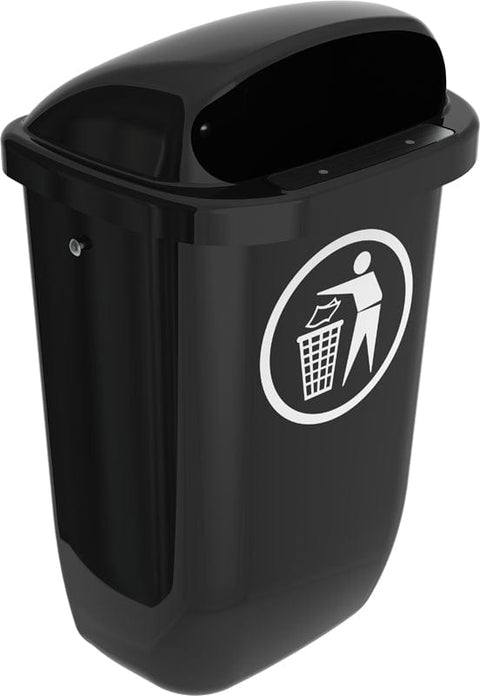
Product Shown: Mountable Outdoor 50 Litre Rubbish Bin
By making waste disposal quick and accessible, this public litter bin helps reduce the chances of people dropping items such as drink cups, food packaging, or wrappers. Its compact design also allows multiple bins to be installed across larger sites, improving overall waste collection coverage.
3. Exeo External Recycling Bin - 90 Litre
Busy urban areas require reliable street recycling bins that can withstand constant use. The Exeo External Recycling Bin is built for high-footfall environments including shopping streets, transport stations, retail parks, and commercial developments.
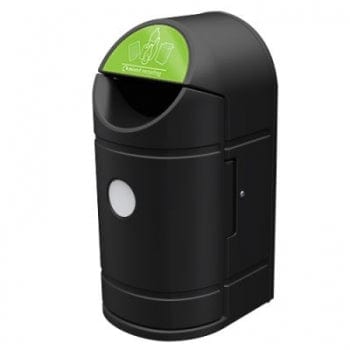
Product Shown: Exeo External Recycling Bin
Its durable construction and large capacity help prevent overflowing waste, which is one of the leading causes of secondary littering. Providing sufficient waste disposal points encourages members of the public to use the bin instead of leaving rubbish on pavements or public spaces.
4. Square Wood Effect Outdoor Litter Bin – 36 Litre
An attractive bin is often more likely to be used, particularly in landscaped environments. The Square Wood Effect Outdoor Litter Bin combines the appearance of traditional timber with the durability of modern materials, making it ideal for gardens, visitor attractions, schools, hospitality venues, and parks.
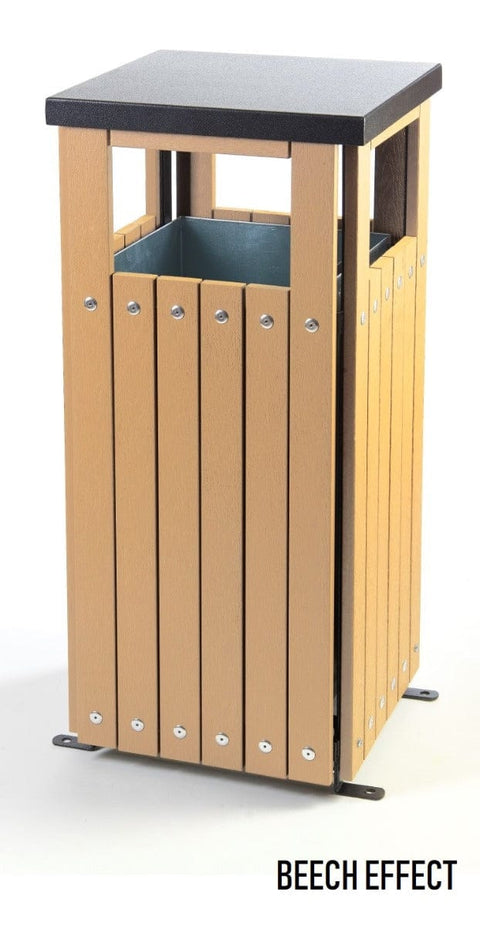
Blending naturally into outdoor surroundings encourages visitors to dispose of waste responsibly without compromising the visual appeal of the area, making it an excellent litter bin for parks and recreational spaces.
Why Litter Bins Are Essential for Reducing Littering
Providing enough outdoor litter bins in the right locations is one of the simplest and most cost-effective ways to reduce littering. Research consistently shows that people are more likely to dispose of waste responsibly when bins are clearly visible, conveniently located, and easy to use.
Modern commercial litter bins also offer practical features such as weather resistance, large waste capacities, durable construction, and low-maintenance materials. These features help prevent overflowing bins, minimise wind-blown litter, discourage scavenging by birds and animals, and reduce the frequency of waste collection.
Whether you're managing a local authority, school, retail park, business premises, public park, or visitor attraction, investing in high-quality public litter bins creates cleaner environments, improves visitor satisfaction, reduces cleaning costs, and demonstrates a commitment to environmental responsibility. By choosing the right street litter bins and positioning them strategically, organisations can make a lasting impact on reducing litter and promoting cleaner communities.
What Can You Do Today?
Litter can feel like one of those problems that’s too big to tackle. But you don’t have to do anything big, you can start small. Start with everyday decisions. Use in a reusable bottle or coffee cup. Take your rubbish home when there isn’t a bin nearby. Pick up a few pieces of litter on your way past, rather than assuming someone else will deal with it. These might not seem like much, but imagine if we all did them.
If you’re not sure where to start, start small. Pick up a few pieces of litter the next time you’re out. Notice where bins are missing, full, or hard to find. Join a local litter pick or start one of your own. These are all ways to take responsibility for the places we all share.
Councils play their part through infrastructure and enforcement. Businesses can look after their premises and the surrounding areas, and help customers make better choices, and each of us, whether acting alone or together, can help set the tone for what’s normal. Because that’s what this really comes down to. Not just cleaning up litter, but changing what people expect to see, and how they choose to behave.
If this is something you care about too, whether as a business, council, or individual, there are more ways to take action than you might think. Often it starts with something really simple; making it easier for people to do the right thing.


