


Walk into any hospital and you’ll see bins everywhere, beside beds, outside treatment rooms, in operating theatres, tucked into corridors, and lined up inside sluice rooms. Most people barely notice them. But behind every colour-coded lid is a carefully organised system designed to protect patients, staff, visitors, and the wider environment.

Hospital bins are far more than ordinary rubbish bins. They form part of a tightly regulated waste-segregation system that controls how everything from used dressings and PPE to chemotherapy waste and sharps is handled, transported, treated, and disposed of safely.
When that system works properly, hospitals stay safer, cleaner, and more efficient. When it breaks down, the consequences can be serious, including infection risks, regulatory breaches, environmental harm, and unnecessarily high disposal costs.
Because hospitals generate huge amounts of waste every day, small mistakes quickly add up. NHS England estimates that healthcare facilities produce more than 150,000 tonnes of clinical waste each year, which means even modest improvements in segregation can save significant amounts of money and reduce carbon emissions.
Quick Navigation
- Why waste segregation matters in hospitals
- Who is responsible for hospital waste?
- The Rules Behind Hospital Bins and Waste Segregation
- Why is hospital waste regulated so closely
- The key regulations shaping hospital waste systems
- What hospitals are legally required to do
- Understanding Hospital Waste Colours
-
Where different types of hospital bins are used
- What Good Hospital Bin Procurement Looks Like
- Sustainability and the NHS Net Zero Agenda
-
Common Hospital Waste Mistakes
-
Why Good Hospital Bin Systems Matter
- Hospital Bin Management Checklist
Why waste segregation matters in hospitals
Unlike most workplaces, hospitals deal with waste streams that can be infectious, hazardous, chemically dangerous, or potentially harmful to the public if handled incorrectly.
That includes:
- Infectious waste contaminated with bodily fluids
- Sharps such as needles and scalpels
- Offensive waste like hygiene products and incontinence pads
- Cytotoxic medicines used in chemotherapy
- Anatomical waste from surgery and pathology departments
Each waste type has its own colour-coded bin, storage requirements, and disposal route. If the wrong waste ends up in the wrong container, the impact reaches far beyond the bin itself. It can lead to:
- Increased infection risks
- Injuries to cleaners, porters, nurses, and waste contractors
- Recyclable waste becoming contaminated
- Expensive treatment routes being used unnecessarily
- Breaches of healthcare waste regulations
- Avoidable environmental damage
Disposal costs are a particularly important issue. Infectious waste sent for incineration is significantly more expensive to process than offensive or domestic waste, so poor segregation can quietly cost hospitals thousands of pounds over time.
Good waste systems also support the day-to-day running of a hospital in ways people rarely think about.
- A correctly placed sharps bin helps prevent needlestick injuries.
- A clearly labelled clinical waste bin makes treatment areas safer.
- Well-designed segregation systems help wards stay cleaner and less cluttered.
- Better waste management plays a growing role in helping the NHS meet its Net Zero targets.
- In healthcare, waste management isn’t separate from patient care, it’s part of it.
Who is responsible for hospital waste?
One of the biggest misconceptions about hospital bins is that waste management sits solely with cleaning or facilities teams. In reality, responsibility is shared across multiple departments.
Estates and Facilities Teams
These teams oversee waste contracts, storage areas, collections, and overall compliance.
Waste Managers
Most NHS trusts have dedicated waste managers responsible for staff training, audits, segregation policies, and ensuring the organisation follows HTM 07-01 guidance.
Infection Prevention and Control (IPC)
IPC teams help shape how bins are used within clinical environments to reduce contamination and infection risks.
Procurement Teams
Procurement teams source compliant bins, liners, sharps containers, and waste services while balancing cost, durability, and sustainability.
Clinical Staff
Nurses, doctors, healthcare assistants, and laboratory staff make segregation decisions at the point where waste is produced, which is why clear systems and well-placed bins matter so much.
Sustainability Leads
As the NHS works toward ambitious environmental targets, sustainability teams are increasingly involved in reducing waste volumes and improving recycling rates.
Ultimately, hospital waste management only works when everybody follows the same system consistently.
The Rules Behind Hospital Bins and Waste Segregation
Before looking at the different bin colours and waste types, it helps to understand why hospital waste systems are so structured in the first place. Hospitals don’t choose bin colours, storage methods, or disposal routes at random. Every part of the system is shaped by national guidance and legal requirements designed to protect public health and ensure hazardous waste is handled safely.
Why is hospital waste regulated so closely
Healthcare waste can carry a wide range of risks. Some waste may be infectious. Some may contain hazardous chemicals or medicines. Certain waste streams can even be harmful to the environment or dangerous during transport. Because of this, hospitals must follow strict rules covering:
- How waste is separated
- Which containers are used
- Where bins are placed
- How waste is labelled and stored
- How it is transported and treated
- Who is allowed to collect it
The aim is simple, to keep people safe and make sure waste ends up in the correct treatment stream.
The key regulations shaping hospital waste systems
HTM 07-01: The NHS guide to healthcare waste management
HTM 07-01 is the main guidance document used across the NHS for managing healthcare waste safely and legally. It sets out:
- the colour-coding system
- segregation rules
- storage requirements
- container standards
- treatment and disposal routes
It’s the reason hospitals across the UK use consistent colours and waste categories.
Environmental Protection Act 1990 – Duty of Care
Under Duty of Care legislation, hospitals are legally responsible for ensuring waste is stored, handled, transported, and disposed of safely. That includes using licensed waste carriers and making sure waste is correctly classified from the moment it’s produced. If the wrong waste ends up in the wrong bin, it can become a compliance issue, even before the waste leaves the building.
Carriage of Dangerous Goods Regulations (CDG)
Some healthcare waste is classed as “dangerous goods” during transport, particularly infectious waste, sharps, and cytotoxic waste (like chemotherapy drugs). These regulations govern how hazardous waste must be packaged, labelled, and transported safely. That’s why sharps bins need UN approval and why certain containers must meet strict testing standards.
NHS Clinical Waste Strategy (2023–2030)
The NHS Clinical Waste Strategy focuses heavily on improving segregation accuracy and reducing unnecessary incineration. Research suggests that a significant proportion of waste placed in high-cost clinical waste streams could have been disposed of more sustainably elsewhere. Better staff training, clearer signage, and more effective bin placement are all part of reducing that problem.
Waste Classification Guidance
National waste classification guidance defines the different healthcare waste categories themselves, including:
- Infectious waste
- Offensive waste
- Anatomical waste
- Pharmaceutical waste
- Domestic waste
- Cytotoxic and cytostatic waste (waste contaminated with medicines that either kill cells (cytotoxic) or stop cells from growing and dividing (cytostatic), such as chemotherapy drugs.
These classifications determine both the colour of the bin and how the waste must ultimately be treated.
What hospitals are legally required to do
Healthcare providers must:
- Segregate waste correctly at the point where it’s produced
- Use the correct colour-coded containers
- Store waste securely
- Use approved sharps containers
- Maintain accurate documentation
- Train staff regularly
- Ensure waste reaches the correct treatment facility
Although the system can seem complex from the outside, the goal is actually to make waste handling simpler and safer for busy healthcare staff. That’s why colour-coding plays such an important role, it allows staff to make quick, consistent decisions without needing to think about legislation every time they dispose of something.
Understanding Hospital Waste Colours and What They Mean
Hospital waste segregation might look complicated at first glance, but the colour-coding system is designed to make things simpler for busy healthcare staff. Instead of memorising regulations or treatment processes, staff can make quick decisions based on colour alone. Each colour represents a specific type of waste, the level of risk it carries, and how it must be treated afterwards.
Because the system is used consistently across the NHS and private healthcare settings, a yellow clinical waste bag in one hospital should mean exactly the same thing in another. That consistency is essential in environments where waste is handled by multiple departments, contractors, and transport teams every single day.
Getting segregation right matters for three main reasons:
- Protecting people from infection and injury
- Keeping hospitals legally compliant
- Avoiding unnecessary disposal costs and carbon emissions
Yellow Bins: Infectious Waste Requiring Incineration
Yellow clinical waste bins are used for high-risk infectious waste that must be destroyed through high-temperature incineration. This is typically the waste people associate most closely with hospitals. Common examples include:
- Infectious dressings and swabs
- Items heavily contaminated with blood
- PPE from isolation areas
- Certain microbiology waste
- Materials contaminated with infectious bodily fluids
Because this waste carries a higher level of risk, alternative treatment methods aren’t considered suitable. Incineration is used to safely destroy pathogens and prevent contamination spreading further down the waste chain.
Yellow-stream disposal is also one of the most expensive treatment routes, which is why hospitals work hard to avoid unnecessary over-classification.
Orange Bins: Infectious Waste Suitable for Alternative Treatment
Orange bins are also used for infectious waste, but for waste that can safely go through alternative treatment rather than incineration.
That often includes:
- Dressings from general wards
- PPE contaminated with bodily fluids
- Swabs and soft waste from infectious patients
- Lower-risk infectious materials
Instead of being incinerated, this waste can often be disinfected using processes such as steam sterilisation before final disposal. The distinction between yellow and orange waste may seem minor, but financially and environmentally, it makes a huge difference. Orange-stream waste is generally cheaper to process and produces a lower environmental impact than incineration-only waste.
Tiger Stripe Bins: Offensive Waste
Tiger stripe waste bags, marked with black and yellow stripes, are used for offensive waste. This is waste that may be unpleasant or unhygienic, but isn’t considered infectious. Examples include:
- Incontinence pads
- Nappies
- Sanitary waste
- Non-infectious PPE
- Uncontaminated dressings
This category is often misunderstood because the waste can look “clinical” even when it isn’t infectious. Correct segregation here is important because offensive waste is far less expensive to treat than infectious waste. When non-infectious waste ends up in orange or yellow streams unnecessarily, hospitals end up paying significantly more for disposal than they need to.
Red Bins: Anatomical Waste
Red bins are reserved for recognisable anatomical waste, including:
- Body tissue
- Organs
- Surgical specimens
- Some placental waste, depending on local policy
Because this waste can present both infection risks and ethical concerns, it is handled under particularly strict controls. These waste streams are commonly found in operating theatres, pathology departments, mortuaries, and maternity services.
Purple Bins: Cytotoxic and Cytostatic Waste
Purple bins are used for waste contaminated with cytotoxic or cytostatic medicines, hazardous drugs that can damage cells or affect healthy tissue.
This includes certain:
- Chemotherapy medicines
- Antiviral drugs
- Hormone treatments
- Immunosuppressant medicines
Items placed into purple waste streams may include:
- Drug vials
- IV lines
- Contaminated PPE
- Syringes and sharps used during treatment
Because these medicines can be carcinogenic (can cause cancer), mutagenic (can damage DNA), or harmful to reproduction, they require specialist handling and high-temperature incineration. This is one of the most tightly controlled waste streams in healthcare.
Black Bins: Domestic Residual Waste
Black bins are used for general non-clinical waste that cannot be recycled. In hospitals, that now represents a much smaller category than it once did due to increasingly strict recycling requirements. Black-bin waste may include:
- Non-recyclable packaging
- Contaminated paper or card
-
Every day rubbish that doesn’t belong in clinical or recycling streams
Under the UK’s newer Simpler Recycling reforms, hospitals are expected to separate recyclable materials and food waste more carefully than before, reducing the amount of waste entering the general residual stream.
Sharps Bins: Protecting Staff from Injury and Infection
Sharps bins are among the most important containers used anywhere in healthcare settings. These rigid, puncture-resistant bins are designed for anything capable of cutting or piercing skin, including:
- Needles
- Scalpels
- Syringes
- Cannulas
- Suture needles
- Broken medicine vials
Because needlestick injuries can expose staff to serious infections, sharps must be disposed of immediately at the point of use.
Like soft clinical waste, sharps bins also follow a colour-coded system based on contamination type.
Yellow-Lidded Sharps Bins
Used for sharps contaminated with medicines or medicinal products. Typical examples include needles used for injections, vaccines, or medication administration. These bins require incineration.
Orange-Lidded Sharps Bins
Used for sharps contaminated with blood or bodily fluids, but not medicines. For example, needles used during blood tests. These can usually go through alternative treatment processes rather than incineration.
Purple-Lidded Sharps Bins
Used for sharps contaminated with cytotoxic or cytostatic medicines. These are commonly found in oncology departments and chemotherapy treatment areas and require specialist disposal through high-temperature incineration.
Although the colour system may seem complex and detailed, it allows healthcare staff to make fast, safe decisions in busy clinical environments where hesitation or confusion can increase risk.

The Different Types of Hospital Bins and Where They’re Used
Once you understand the colour-coding system, the next step is understanding the bins themselves. Hospitals rely on a surprisingly wide range of waste containers, each designed for a specific environment, level of risk, and type of waste. A bin used in a patient bathroom will look very different from one used in an operating theatre or oncology unit, and for good reason.
In healthcare settings, bin design affects far more than appearance. The size, shape, lid type, material, and placement of a bin can all influence how safely waste is segregated and how easy it is for staff to follow the correct procedures during busy shifts.
Clinical Waste Bins
These are the pedal-operated bins most commonly seen on wards, in treatment rooms, and throughout clinical areas.
They’re designed for soft clinical waste such as:
- Dressings
- Wipes
- Gloves
- Aprons
- Swabs
- Contaminated PPE
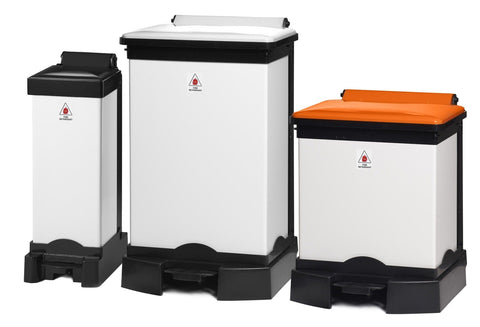
Product shown: All Plastic Sackholder
Most hospitals use rigid plastic or metal bins fitted with colour-coded lids to match the appropriate waste stream.
Common features include:
- Foot-pedal operation to reduce hand contact
- Wipe-clean surfaces
- Fire-retardant materials in some areas
- Durable liners and frames
- Clearly visible colour coding
These bins are used constantly throughout the day, so ease of use matters. If staff have to struggle with awkward lids or poorly placed containers, segregation accuracy tends to suffer.
Sharps Bins
Sharps bins are specifically designed to prevent injuries from needles and other sharp instruments. Unlike soft waste bins, they’re rigid, puncture-resistant containers with strict fill limits and locking systems.
Most include:
- Temporary closure mechanisms during use
- Permanent locking systems for disposal
- Clearly marked fill lines
- UN-approved construction for transport safety
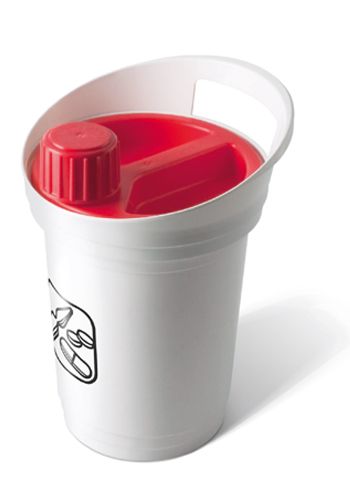
Product shown: Mini Medical Waste Disposal Bin
Sharps bins are often mounted directly beside treatment areas so staff can dispose of needles immediately after use. That placement is crucial. In busy healthcare environments, the safest sharps bin is the one that’s always within easy reach.
Cytotoxic Waste Bins
Purple-lidded cytotoxic bins are typically found in:
- Oncology units
- Chemotherapy suites
- Aseptic pharmacy departments
- Specialist treatment rooms
These bins are used for waste contaminated with hazardous medicines and are designed to keep those materials fully separated from other clinical waste streams. Because cytotoxic medicines can remain hazardous even in trace amounts, these bins are handled under especially strict controls.
Anatomical Waste Bins
Red anatomical waste bins are designed for recognisable human tissue and other sensitive waste. They’re commonly used in:
- Operating theatres
- Pathology laboratories
- Mortuaries
- Maternity departments
These bins are usually leak-proof, lockable, and clearly labelled to prevent misuse or accidental access. Unlike general clinical waste containers, discretion and dignity are important considerations here as well as infection control.
Wheeled Clinical Waste Containers
Larger wheeled bins are used to move waste safely around hospital sites and into external storage compounds before collection. You’ll often see these in:
- Service corridors
- Waste hold rooms
- Loading areas
-
external compounds
Their larger capacity helps reduce manual handling and allows waste to be transported more efficiently between departments.
Most include:
- Lockable lids
- Heavy-duty wheels
- Smooth internal surfaces for cleaning
- Colour-coded lids or bodies
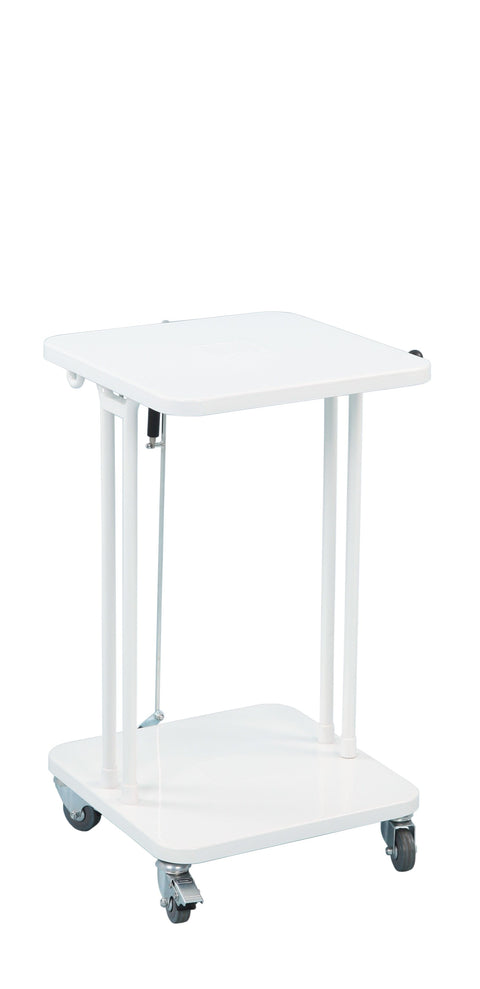
Bedside and Patient-Room Bins
Bins used in patient areas have a slightly different role. As well as supporting staff, they also need to be easy for patients and visitors to understand and use correctly. These may include:
- Domestic waste bins
- Offensive waste bins
- Smaller clinical waste containers
Clear signage and sensible placement make a major difference here. Patients are unlikely to understand healthcare waste categories in detail, so hospital layouts need to make correct disposal feel intuitive.
Sluice Room Bins
Sluice rooms deal with some of the messiest and most hygiene-sensitive waste generated in hospitals. Bins in these areas are commonly used for:
- Incontinence products
- Bedpan liners
- Vomit bowls
- Contaminated soft waste
Because these rooms are cleaned frequently, bins are usually designed with smooth, easy-clean surfaces and hands-free operation. Larger-capacity containers are also common due to the volume of waste generated.
Touch-Free and Sensor Bins
Many hospitals now use touch-free bins in higher-traffic clinical areas as part of wider infection-control measures. These are particularly common in:
- Outpatient departments
- Treatment rooms
- Diagnostic areas
- Public handwashing stations
Reducing hand contact with frequently touched surfaces can help lower the risk of cross-contamination, particularly during periods of heightened infection control.
Accessibility-Friendly Bin Design
Hospital bins also need to work within accessible healthcare environments. Poorly positioned bins can create obstacles for wheelchair users, interfere with evacuation routes, or make clinical spaces harder to navigate safely. To improve accessibility, hospitals may use:
- Slimline bins
- Wall-mounted units
- Reduced-height openings
- Hands-free operation
- Layouts that maintain clear floor space
Good waste management should support the overall usability of a healthcare environment, not make it more difficult to move through.
External Waste Storage Bins
Before healthcare waste is collected, it must be stored securely in designated external compounds. These larger external containers are designed to keep waste protected from weather, pests, tampering, and accidental access. Storage areas typically include:
- Locked compounds
- Segregated waste streams
- Weather-resistant containers
- Clear signage and labelling
Strict storage rules help ensure waste remains safe and traceable from the moment it leaves a ward to the moment it reaches its final treatment facility.
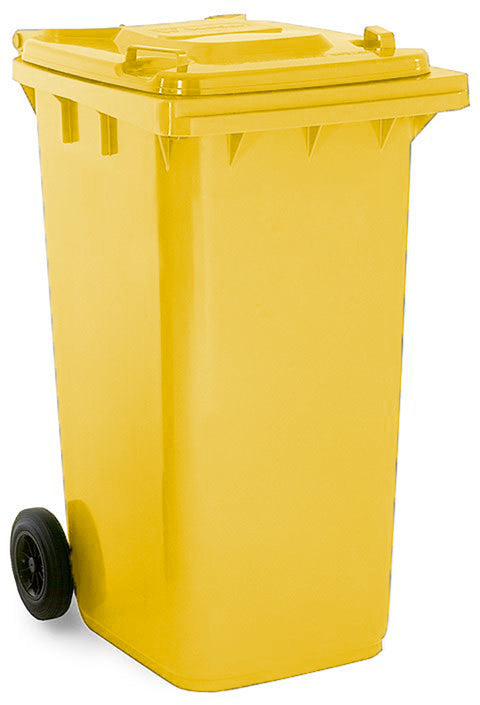
Product shown: Clinical Waste Yellow 240 Litre Wheelie Bin
Why Bin Placement Matters Just as Much as Bin Type
In healthcare settings, convenience strongly influences behaviour. If the correct bin isn’t immediately available, staff are far more likely to use whichever container is closest, especially during busy shifts or emergency situations. That’s why good hospital waste management focuses not just on the bins themselves, but on where those bins are positioned.
Effective placement usually means:
- Sharps bins located at the point of use
- Clinical waste bins beside treatment areas
- Offensive waste bins in bathrooms and hygiene areas
- Domestic waste bins in offices, waiting areas, and staff rooms
- Specialist waste bins only in departments that genuinely need them
Small layout decisions can have a surprisingly large impact on segregation accuracy, infection control, and disposal costs.
Why Hospitals Need So Many Different Bins
At first glance, the number of different bins used across a hospital can seem excessive. But each one exists for a reason. Different types of healthcare waste carry different levels of risk, require different treatment methods, and cost vastly different amounts to dispose of safely. Using the right bin in the right place helps hospitals:
- Protect staff and patients
- Reduce infection risks
- Comply with UK waste regulations
- Avoid unnecessary disposal costs
- Improve recycling rates
- Reduce environmental impact
In other words, hospital bins aren’t solely about waste collection, they’re part of the infrastructure that helps healthcare environments function safely every day.

Choosing Hospital Bins That Support Safety, Sustainability, and Net Zero
When hospitals buy bins, they’re making decisions that affect far more than waste collection. The right bins make it easier for staff to work safely, segregate waste correctly, reduce infection risks, and avoid unnecessary disposal costs. Increasingly, they also play a role in helping the NHS reduce carbon emissions and work towards its Net Zero goals.
With the NHS aiming to reach Net Zero across its own operations by 2040, and across its wider supply chain by 2045, even relatively small procurement decisions now carry more weight than they once did. That’s why many trusts no longer see bins as simple consumables or facilities equipment. They’re part of the wider clinical infrastructure of a hospital.
What Good Hospital Bin Procurement Looks Like
Choosing bins that fit how staff actually work
The most effective procurement decisions go beyond product catalogues and technical specifications. A bin might meet every compliance requirement on paper, but if it’s awkward to open, difficult to position, or constantly in the way, staff are less likely to use it properly during busy shifts. Hospitals work best when waste segregation becomes almost automatic. That’s far easier to achieve when bins fit naturally into the layout and rhythm of a ward. Simple details make a difference, including:
- Hands-free operation
- Sensible opening heights
- Clear colour coding
- Compatibility with clinical trolleys
- Bins that fit neatly into tight treatment spaces
- In practice, good procurement is often about removing friction and making the correct choice the easiest one.
Designing systems for real-world behaviour
HTM 07-01 explains the rules around healthcare waste, but it doesn’t tell hospitals how to design systems that work smoothly in real clinical environments. That’s where practical observation matters. Procurement teams that spend time on wards, speak with clinical staff, and understand where segregation mistakes commonly happen are often far better placed to choose bins that improve accuracy and reduce contamination. Sometimes the most effective changes are surprisingly simple, such as:
- Standardising bin layouts across departments
- Reducing visual clutter
- Improving signage
- Making specialist waste bins easier to identify quickly
Consistency matters more than many people realise. Staff who move between wards shouldn’t have to relearn waste systems every time they enter a new department.
Investing in durable bins that last
Hospitals are demanding environments. Bins are opened, moved, cleaned, disinfected, and emptied constantly throughout the day. Lower-quality containers may initially cost less, but they often crack, warp, become difficult to clean, or fail to seal properly over time. That creates both hygiene concerns and replacement costs.
Well-made bins tend to last longer, maintain their appearance better, and cope more effectively with repeated cleaning and heavy daily use. Over time, durable products are usually the more cost-effective option.

Sustainability and the NHS Net Zero Agenda
Choosing materials with lower environmental impact
The materials used to manufacture hospital bins also contribute to a healthcare organisation’s overall carbon footprint. Many trusts are now looking more closely at suppliers who offer:
- Recycled-content plastics
- Longer-lasting components
- Repairable designs
- Recyclable materials at end of life
In non-clinical environments especially, these choices can help reduce environmental impact without compromising hygiene or safety standards. The challenge is finding the right balance between infection control, durability, practicality, and sustainability.
Reusable sharps containers: one of the biggest sustainability wins
Reusable sharps systems are increasingly seen as one of the most effective ways for hospitals to reduce waste and carbon emissions. Studies involving NHS trusts that switched from disposable sharps containers to reusable systems found substantial reductions in plastic waste and carbon output, while also improving durability and handling safety.
Because reusable containers are professionally cleaned and reprocessed rather than discarded after a single use, they significantly reduce the volume of plastic entering the clinical waste stream.
Smarter servicing and collection schedules
Sustainability isn’t just about the bins themselves. Collection schedules matter too. Over-servicing bins wastes fuel, labour, and time. Under-servicing creates overflowing bins, hygiene concerns, and frustration for staff. Many hospitals are now reviewing collection frequencies based on actual usage patterns rather than fixed schedules.
Some larger sites also use fill-level monitoring or smart bin technology to identify when collections are genuinely needed, helping reduce unnecessary vehicle movements and improve efficiency. Even small operational changes can make a noticeable difference when applied across an entire hospital site.
Common Hospital Waste Mistakes (And How to Avoid Them)
Even in hospitals with good systems in place, waste mistakes still happen. Healthcare environments are busy, high-pressure places, and waste segregation is often competing with far more urgent clinical priorities. But small mistakes can quickly lead to higher costs, compliance problems, unnecessary carbon emissions, and increased risks for staff. The good news is that most problems are preventable once hospitals know what to look for.
Putting the wrong waste in the wrong bin
Misclassification remains one of the biggest waste-management challenges across the NHS. When non-infectious waste is incorrectly placed into yellow or orange clinical waste streams, hospitals end up paying for unnecessarily expensive treatment routes, particularly incineration. Contamination can also cause entire collections to be rejected or reclassified.
How to reduce the problem
- Use clear signage near bins
- Standardise layouts across departments
- Keep colour coding consistent
- Provide regular refresher training
The easier the system is to follow, the fewer mistakes staff tend to make.
Poor bin placement
If the correct bin isn’t close by, people will usually use the nearest available option instead. That’s especially true during busy clinical situations where speed matters more than perfect segregation.
How to reduce the problem
- Position sharps bins at the point of use
- Place clinical waste bins beside treatment areas
- Review layouts regularly with frontline staff
- Avoid overcrowded or cluttered waste stations
Good placement supports good habits.
Overfilled sharps bins
Overfilled sharps bins create genuine safety risks. Once sharps rise above the fill line, needles and blades can shift position, prevent lids from closing properly, and increase the likelihood of needlestick injuries during handling or transport.
How to reduce the problem
- Ensure fill lines are clearly visible
- Replace bins before they reach capacity
- Provide enough sharps containers in busy areas
- Remind staff not to force extra waste into containers
Small habits here make a major difference to staff safety.
Using domestic bins for clinical waste
This issue often happens in offices, waiting rooms, or mixed-use areas where clinical and domestic waste streams overlap. Without clear differentiation, staff and visitors may use whichever bin appears most convenient.
How to reduce the problem
- Clearly separate domestic and clinical waste bins
- Avoid placing similar-looking bins side by side
- Use clear labelling and colour coding throughout the site
Inconsistent staff training
Hospitals have rotating staff, temporary workers, agency teams, and constantly changing clinical pressures. Without regular training, segregation accuracy naturally starts to decline over time.
How to reduce the problem
- Provide short, practical refresher sessions
- Use visual posters and quick-reference guides
- Include waste procedures in staff inductions
- Reinforce key messages during team meetings
Training tends to work best when it feels practical rather than overly technical.
Poorly managed external waste storage
External waste compounds can quickly become weak points if they aren’t managed properly. Poor segregation, insecure storage, or unclear labelling can all create compliance issues and increase risks around pests, contamination, and accidental access.
How to reduce the problem
- Use lockable containers
- Maintain clear signage
- Separate waste streams properly
- Carry out regular inspections and audits
External storage areas should be treated as part of the wider waste-management system, not forgotten spaces behind the building.
Over-servicing or under-servicing bins
Collection schedules that don’t match real usage patterns create problems at both extremes. Over-servicing increases costs, fuel use, and carbon emissions. Under-servicing leads to overflowing bins and hygiene concerns.
How to reduce the problem
- Review collection schedules regularly
- Adjust servicing to match footfall and activity levels
- Monitor waste volumes across departments
- Consider smart sensors or fill-level monitoring on larger sites
The most efficient systems are usually the ones that stay flexible.
Why Good Hospital Bin Systems Matter
A well-designed bin system plays a bigger role in hospital life than most people realise. When the right bins are in the right places, staff don’t need to stop and think about waste disposal. Sharps are handled safely, segregation becomes more accurate, treatment areas stay cleaner, and compliance becomes easier to maintain.
Good waste systems also support the wider operational picture. Better segregation can reduce disposal costs, lower carbon emissions, improve recycling rates, and cut the number of rejected collections. It can also make day-to-day work easier for porters, cleaners, estates teams, and clinical staff alike. And importantly, most improvements don’t require major overhauls. Often, the biggest gains come from relatively small practical changes, including:
- Clearer signage
- Better bin placement
- Consistent layouts across departments
- Regular staff training
- Smarter servicing schedules
Because waste touches almost every part of a hospital, even modest improvements can have a noticeable impact across the wider organisation.
Simple Checklist for Better Hospital Bin Management
Here’s a quick way to assess whether a hospital waste system is working effectively:
✔ Are the correct colour-coded bins available at the point of use?
✔ Are sharps bins positioned within easy reach in clinical areas?
✔ Are hands-free or pedal-operated bins used where appropriate?
✔ Are staff receiving regular waste-segregation training?
✔ Are bin layouts consistent across wards and departments?
✔ Are external waste-storage areas secure and clearly organised?
✔ Are licensed waste carriers being used with proper documentation?
✔ Are collection schedules reviewed regularly to avoid over- or under-servicing?
✔ Are sustainable options such as reusable sharps systems being considered?
✔ Are segregation accuracy and contamination rates being monitored?
If most of those boxes can be ticked, the hospital is already in a strong position.
Download our Clinicial Waste Bin Checklist
And if not, the encouraging part is that improvements often begin with relatively small, practical changes, sometimes with something as simple as placing the right colour-coded bin in the right location.


