


In workplaces, public buildings, hospitality venues and outdoor smoking areas, fires don't always start with something dramatic. Sometimes it's a smouldering paper towel in a washroom, a cigarette that wasn't properly extinguished, or a spark that finds its way into a rubbish bin. That's where self-extinguishing bins come in.

Designed to stop small fires before they have a chance to spread, these specialist bins provide a simple but effective layer of protection. For facilities managers, business owners and health and safety professionals, they can play an important role in reducing fire risk and preventing unnecessary disruption.
Quick Navigation
- What Are Self-Extinguishing Bins?
- How Do Self-Extinguishing Bins Work?
- Why Fire Safety Matters in Waste Management
- What Are Self-Extinguishing Bins Made Of?
- Benefits of Self-Extinguishing Bins
- Where Self-Extinguishing Bins Are Used
- The Main Types of Self-Extinguishing Bins (and When to Choose Them)
- How to Choose the Right Self-Extinguishing Bin
What Are Self-Extinguishing Bins?
Self-extinguishing bins are waste containers designed to put out small fires inside the bin automatically. They do this by restricting the oxygen available to the fire.
If you've ever completed fire safety training, you'll probably remember the fire triangle: fuel, heat and oxygen. A fire needs all three to keep burning. Remove one, and the fire goes out.
Self-extinguishing bins are specifically designed to remove the oxygen element, causing flames or smouldering materials to die out before they can spread.
How Do Self-Extinguishing Bins Work?
The exact design varies between manufacturers, but most self-extinguishing bins use one or more of the following features:
1. A Tapered or Funnel-Shaped Lid
These lids narrow towards the top, restricting airflow and helping to smother any flames inside the bin.

2. A Self-Closing or Weighted Flap
Some models include a self-closing lid or weighted flap that automatically returns to a closed position after use, limiting the amount of air that can enter the container.
3. Heat-Resistant, Non-Combustible Materials
Steel and aluminium are commonly used because they won't burn and can withstand high temperatures without contributing fuel to a fire.
4. Built-In Airflow Restrictions
Some bins include internal rings, plates, or baffles beneath the lid. These don't affect day-to-day use, but they do reduce the amount of air reaching the waste inside, making it difficult for a fire to continue burning.
5. Fire-Tested Construction
Many commercial self-extinguishing bins are independently tested to verify their fire performance. Look for recognised certifications such as TÜV or GS (Geprüfte Sicherheit), which indicate the product has been assessed for safety, build quality and self-extinguishing performance.

Why Fire Safety Matters in Waste Management
When people think about workplace fire risks, bins aren't usually the first thing that comes to mind. Yet waste containers are a surprisingly common source of small fires. Common causes include:
- Smouldering paper or cardboard
- Hot ash and embers
- Carelessly discarded cigarettes
- Chemical-soaked cleaning cloths
- Overheated electrical waste
- Poor housekeeping and waste storage practices
Bin and refuse fires are more common than many people realise. Fire and rescue services across the UK regularly attend incidents involving wheelie bins, skips. and waste storage areas. Deliberate ignition, careless disposal of smoking materials, and poor waste management are all recognised causes. In fact, Scottish Fire and Rescue Service data shows that around half of the deliberate fires it attends involve rubbish and refuse.
Even a relatively small bin fire can have serious consequences. A smouldering item can produce large amounts of smoke, trigger fire alarms, force building evacuations and damage nearby property. In busy workplaces and public buildings, that disruption can quickly become costly.
UK fire safety legislation requires employers and those responsible for premises to identify fire risks and take reasonable steps to reduce them. While self-extinguishing bins aren't a legal requirement, they can be a practical part of a wider fire prevention strategy, helping to reduce the likelihood of small incidents escalating into larger ones.
What Are Self-Extinguishing Bins Made Of?
The materials used in a self-extinguishing bin are just as important as its design. These bins need to withstand high temperatures, contain heat safely and avoid contributing fuel to a fire. Most commercial-grade models are made from one or more of the following materials:
Steel
Steel is the most common material used in self-extinguishing bins because it's strong, durable and non-combustible. One of its biggest advantages is that it retains its shape even when exposed to significant heat. That means the bin can continue containing the fire while the self-extinguishing design does its job.
Steel bins are particularly well suited to:
- Offices and public buildings
- Industrial environments
- High-traffic areas where durability matters
They're also easy to maintain, resistant to everyday wear and tear, and capable of providing years of reliable service.
Aluminium
Aluminium is often used for outdoor cigarette bins and smoker's poles. It's naturally resistant to corrosion, making it ideal for locations exposed to rain and changing weather conditions. Because it's much lighter than steel, aluminium is also easier to install in wall-mounted or pole-mounted designs.
Although aluminium can soften under extreme heat, it doesn't burn. In smoking-area applications, the metal housing safely contains heat from discarded cigarettes and smoking materials until they extinguish naturally.
Aluminium is particularly suitable for:
- Outdoor smoking areas
- Public spaces exposed to the elements
- Locations where weight and corrosion resistance are important
Powder-Coated Finishes
Powder coating isn't a material in itself, but it's a common finish used on fire-safe waste bins. A quality powder-coated finish provides:
- Greater durability
- Improved corrosion resistance
- A wider range of colour options
- Additional surface protection without increasing fire risk
Many powder coating systems used in the UK achieve high fire-performance classifications under European standards. Put simply, they contribute very little to fire growth, produce minimal smoke and do not create flaming droplets. This allows manufacturers to improve the appearance and durability of a bin without compromising its fire-safe performance.
Stainless Steel
Where appearance matters alongside fire safety, stainless steel is often the material of choice. Commonly found in hotels, reception areas, healthcare facilities, and modern office environments, stainless steel combines a premium finish with excellent fire-resistant properties.
Benefits include:
- High resistance to corrosion
- A clean, professional appearance
- Easy cleaning and maintenance
- Excellent durability in busy environments
For organisations looking to balance aesthetics, hygiene, and safety, stainless steel is often the preferred option.
Benefits of Self-Extinguishing Bins
Self-extinguishing bins do far more than provide somewhere to dispose of waste. They help reduce fire risk, minimise disruption and give organisations greater peace of mind in environments where safety matters.
1. They stop small fires before they become major incidents
Many fires start with something relatively minor: a smouldering paper towel, a cigarette that wasn't fully extinguished or a piece of waste exposed to heat. Self-extinguishing bins are designed to contain these incidents at source by limiting the airflow available to a fire. As a result:
- Flames are less likely to spread
- Heat and smoke remain contained
- Small incidents are less likely to become larger emergencies
For facilities managers and building operators, that can mean the difference between a simple clean-up and a serious disruption to normal operations.
2. They support your wider fire safety strategy
Fire safety legislation doesn't prescribe specific bins, but it does require organisations to assess risks and implement suitable control measures. A self-extinguishing bin can help address risks associated with:
- Waste disposal practices
- Smoking materials
- Potential ignition sources
- High-traffic public areas
Unlike many safety measures, there's no additional training, monitoring, or administration required. Once installed, the bin helps reduce risk as part of your everyday fire prevention approach.
3. They help reduce disruption and unexpected costs
Even a small bin fire can create disproportionate disruption. Smoke can contaminate nearby areas, alarms can interrupt operations, and emergency responses can affect staff, visitors and customers. In some cases, businesses may also face clean-up costs, equipment damage or temporary closures.
By helping to contain incidents before they escalate, self-extinguishing bins reduce the likelihood of avoidable disruption and the costs that often come with it.
4. They provide extra protection in higher-risk environments
Some workplaces naturally present a greater fire risk than others. Laboratories, workshops, warehouses, healthcare facilities, and school design and technology rooms often contain materials or activities that increase the chances of accidental ignition.
In these environments, self-extinguishing bins provide an additional layer of protection. They help manage fire risk passively, without relying on someone noticing and responding to a problem immediately.
5. They make smoking areas safer
Discarded cigarettes remain one of the most common causes of small waste fires, particularly in outdoor environments. Self-extinguishing cigarette bins and smoker's poles are specifically designed to contain heat from smoking materials and prevent smouldering waste from igniting surrounding rubbish.
For councils, hospitals, universities, retail parks, and commercial premises, they offer a straightforward way to improve safety in designated smoking areas while helping to reduce smoking-related fire incidents.
6. They're built to last
Self-extinguishing bins are typically manufactured from robust materials such as steel, stainless steel and aluminium. They're designed to withstand heavy daily use, resist weather damage, and remain effective in demanding environments.
That durability often means:
- Fewer replacements
- Lower maintenance costs
- Better long-term value
For organisations managing multiple sites or large estates, those savings can add up over time.
7. They provide reassurance in busy public spaces
Bins in public areas are often heavily used, left unattended, and exposed to a wide range of users. Whether they're located outside a hospital, beside a transport hub, or at the entrance to a public building, they need to perform reliably without constant supervision. A self-extinguishing bin doesn't rely on staff intervention or public behaviour. Instead, it's designed to do one job: contain small fires before they become bigger problems.
For organisations responsible for public spaces, that extra reassurance can be invaluable.
Where Self-Extinguishing Bins Are Used
Self-extinguishing bins aren’t limited to one type of environment. In fact, they tend to make the most difference in places where fire risk is easy to overlook because everything feels routine, busy, or “under control”.
Offices
Think about a typical office. Cardboard deliveries end up stacked in corners, bins fill quickly with paper and packaging, and waste gets taken for granted.
It doesn’t feel like a fire risk, until you consider how easily everyday materials can ignite if something hot or smouldering is accidentally thrown away. A self-extinguishing bin provides protection in the background, without changing how the space works or how people use it.
Busy public buildings
Libraries, leisure centres, council offices, and transport hubs are all places where bins are constantly used and often left unattended. The risk here isn’t just accidental ignition, but volume. More people means more waste, more unpredictability, and in some cases, vandalism or deliberate fire-setting. A bin that can contain a fire early on is an important safeguard in these environments.
Schools and universities
Education settings produce a steady flow of paper, packaging, food waste, and drinks containers. From corridors and classrooms to libraries and accommodation blocks, bins are used heavily throughout the day, and are often left unattended outside teaching hours.
If something smouldering is disposed of carelessly, the consequences can escalate quickly. A fire in a school or university isn’t just disruptive; it can shut down teaching, exams, or entire buildings. Fire-safe bins help reduce that risk in a practical, low-effort way.
Industrial and manufacturing environments
Workshops, warehouses, laboratories, and production lines are higher-risk spaces by nature. Packaging waste, combustible materials, and busy operational routines all increase the chance of ignition. Even a small incident can cause downtime, damage equipment, or disrupt supply chains. In environments where time really is money, self-extinguishing bins provide essential protection that supports wider fire safety controls.
Healthcare settings
Hospitals, clinics, and care facilities rely on uninterrupted service. Waste is generated constantly across staff areas, offices, waiting rooms, and back-of-house spaces.
The impact of a fire here goes far beyond property damage. It can affect patient care, trigger ward closures, and create major operational disruption. Fire-safe bins won’t solve everything, but they do remove one more preventable risk from an already high-pressure environment.
Hospitality and retail
Cafés, restaurants, shops, and shopping centres produce a constant stream of packaging, receipts, napkins, and general waste.
Bins are often placed in busy public areas where staff can’t monitor them constantly. In those conditions, even a small ignition source can escalate quickly. Self-extinguishing bins help contain that risk before it becomes a wider incident that affects customers, staff, or the reputation of a business.
Outdoor areas
Smoking areas are one of the most common places where bin fires start. All it takes is a cigarette end that hasn’t been fully extinguished. Outside offices, hospitals, universities, or transport hubs, bins are often exposed, unsupervised, and affected by wind and weather. Purpose-built cigarette bins and smoker’s poles help contain heat safely and prevent embers from spreading to nearby waste.
The Main Types of Self-Extinguishing Bins (and When to Choose Them)
Not all self-extinguishing bins are built for the same job. The right choice depends on where it’s going, what’s being thrown away, and how busy the environment is.
Self-extinguishing waste-paper bins
Best for: offices, classrooms, meeting rooms, reception areas, libraries, staff rooms
These are the standard fire-safe bins most people picture first. Usually steel, often with a tapered or funnel-style lid, they’re designed to reduce oxygen flow and help prevent a fire from developing. They’re ideal for everyday paper waste, tissues, packaging, and general office rubbish.
Why people choose them:
-
They fit easily into most workplace environments
-
Compact sizes (typically 15–50L)
-
Well suited to paper-based fire risks
-
A straightforward safety upgrade with no disruption
-
Usually the first step when replacing standard office bins
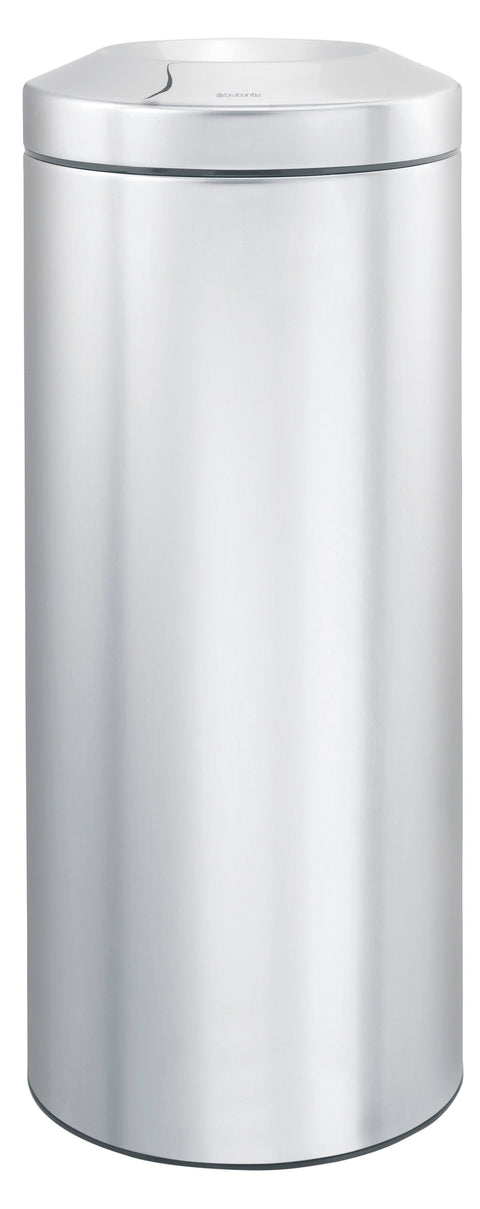
Product shown: Brabantia 30 Litre Flame Guard Waste Paper Bin
Heavy-duty industrial self-extinguishing bins
Best for: workshops, factories, production lines, laboratories, maintenance areas
These are built for tougher environments where waste is heavier, dirtier, or more variable. Larger capacities (50–120L) and reinforced steel construction make them suitable for demanding use. Some include self-closing lids or flaps that further restrict oxygen.
Why people choose them:
-
Handle high waste volumes without issues
-
Suitable for mixed industrial waste (including oily rags and packaging)
-
Extra protection where flammable materials may be present
-
Built for frequent emptying and heavy use
If your risk assessment flags ignition sources or combustible waste, this is usually the most appropriate option.
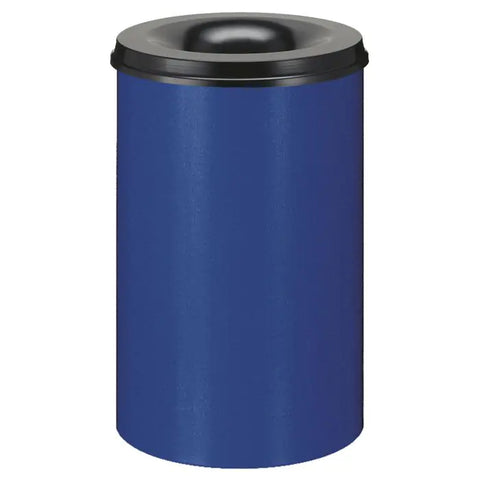
Product shown: Self-Extinguishing Waste Paper Bin - 110 Litre
Self-extinguishing litter bins
Best for: public buildings, transport hubs, schools, universities, shopping centres, outdoor walkways
These are the larger, high-visibility bins used in communal spaces. Capacities typically range from 80–200L, and they’re designed to contain a fire even when heavily filled.
Why people choose them:
-
Suitable for unsupervised public environments
-
High capacity for busy footfall areas
-
Helps reduce arson and accidental ignition risk
-
Often weather-resistant and vandal-resistant
For public-facing waste points, this is usually the most practical and robust option.
Product shown: 200 Litre Self-Extinguishing Waste Paper Bin
Self-extinguishing cigarette bins and smoker’s poles
Best for: smoking shelters, building entrances, car parks, designated smoking areas
Cigarette waste is one of the most common causes of small bin fires. These units are designed specifically for hot ash and smouldering materials. They typically use internal extinguishing systems or restricted airflow to neutralise heat quickly.
Why people choose them:
-
Designed specifically for cigarette disposal
-
Reduces risk of fire spreading to nearby waste
-
Helps keep entrances and smoking areas tidy
-
Weather-resistant and low maintenance
-
Essential wherever smoking is permitted
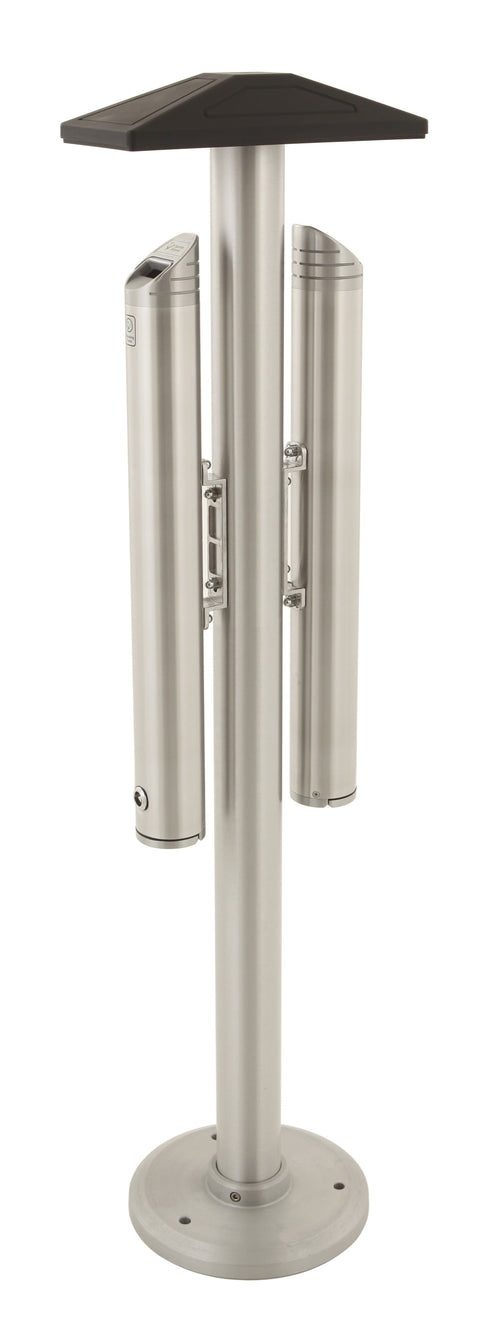
Product shown: Aluminium Double Cigarette Bin - 5.4 Litre
Wall-mounted self-extinguishing bins
Best for: corridors, washrooms, stairwells, narrow walkways, transport hubs
Wall-mounted options free up floor space and reduce obstruction in high-traffic areas. They’re especially useful where space is tight or where floor-standing bins would become a hazard.
Why people choose them:
-
Keep walkways clear and safer
-
Reduce tampering or movement
-
Ideal for narrow or high-traffic spaces
-
Easier for cleaning teams to work around
If space is limited, they often solve multiple problems at once.
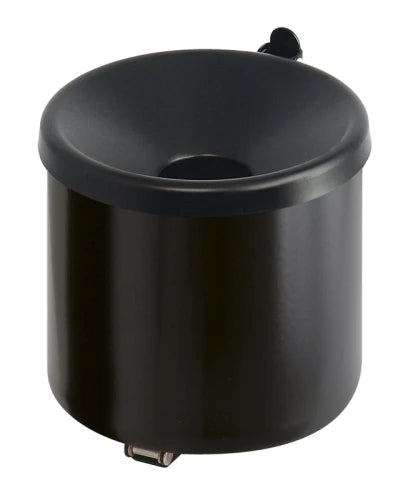
Product shown: Wall Mounted Safety Ashtray - 2 Litre
How to Choose the Right Bin – A Handy Checklist
Once you understand the types, choosing the right bin becomes much easier. It mostly comes down to matching the environment, the waste, and the level of risk.
1. Match the bin to your waste type
Start with what’s actually going into it.
- Mostly paper → waste-paper bin
- Mixed public waste → self-extinguishing litter bin
- Workshop or flammable waste → heavy-duty industrial bin
- Cigarette waste → dedicated cigarette bin or smoker’s pole
Get this wrong, and everything else becomes a compromise.
2. Choose the right capacity
Size has a bigger impact than most people expect.
- 15–30L → small offices, meeting rooms, washrooms
- 30–60L → general workplace use
- 80–200L → public spaces, schools, transport hubs
- 1–5L → cigarette bins
Too small, and bins overflow quickly. Too large, and waste can sit too long and start to smell. The right balance depends on usage, not just space.
3. Consider materials and durability
The environment should guide the build quality.
- Steel → strong all-round option for indoor fire safety
- Stainless steel → premium finish for public buildings
- Aluminium → commonly used for outdoor cigarette bins
- Powder-coated finishes → added protection and colour options
For outdoor or high-traffic areas, durability is worth prioritising from the start.
4. Look for fire-tested designs
Fire testing isn’t just a label, it’s reassurance that the bin performs as expected under real conditions. Independent certifications (such as GS Mark) typically confirm:
- fire resistance performance
- structural integrity
- material safety standards
It’s a simple way to separate properly tested products from unverified claims.
5. Think about placement
Where the bin goes often matters as much as which one you choose.
-
Entrances → litter bins or cigarette bins
-
Workshops → heavy-duty industrial bins
-
Tight spaces → wall-mounted bins
-
Classrooms and offices → waste-paper bins
A good bin in the wrong place won’t perform as intended. Placement is part of the safety system, not an afterthought.
Common Mistakes to Avoid
Even the best self-extinguishing bin can only do its job if it’s chosen and used properly. In practice, most fire risks don’t increase because of dramatic failures, they increase because of small, everyday decisions that don’t always feel important at the time. These are the most common ones worth watching for.
Choosing a bin that’s too small
A bin that’s full by midday stops being effective very quickly. Once waste starts sitting above the rim, lids can’t close properly and the fire-safe design is compromised. That means more oxygen, more exposure, and more risk.
If bins are constantly overflowing or rubbish is regularly left on top, it’s usually not a cleaning issue, it’s a capacity issue.
Using open bins in higher-risk areas
Open-top bins might feel practical, but in the wrong setting they create unnecessary risk. In workshops, corridors, entrances, and other busy spaces, anything from a spark to a cigarette end has direct access to oxygen and surrounding waste. A lid isn’t an accessory here, it’s part of the fire protection.
Placing bins too close to heat sources
It’s surprisingly common to see bins tucked beside radiators, under hand dryers, next to photocopiers, or close to catering equipment.
Individually, these don’t always feel like “dangerous” heat sources. But combined with paper, packaging, or other combustibles, they can become a problem. Good placement is about distance, not convenience.
Not providing proper cigarette disposal
Cigarette ends remain one of the leading causes of small bin fires. When there isn’t a dedicated cigarette bin, people will use whatever is nearby, including planters, litter bins, and even doorways. That behaviour is predictable, which is exactly why it should be planned for. A properly placed cigarette bin or smoker’s pole removes the guesswork and significantly reduces avoidable incidents.
Ignoring basic maintenance
Self-extinguishing bins rely on simple mechanical features like lids, flaps, and restricted airflow systems. If these become damaged or misaligned, the fire-safe function is weakened without it always being obvious.
Because bins sit in the background of daily operations, these issues are often missed. A quick visual check on a regular schedule is usually enough to keep things working as intended.
Using domestic bins in commercial environments
Domestic bins are designed for homes, not workplaces. In offices, workshops, or public buildings, waste volumes are higher, materials are more varied, and expectations around fire safety are stricter. A cheaper bin might look fine at first, but it won’t offer the same level of protection or durability under constant use.
In higher-risk environments, this is one area where “good enough” really isn’t good enough.
The Bottom Line
Self-extinguishing bins are one of those simple, practical measures that can reduce risk without changing how people work or move through a space. They don’t require behaviour change, training, or disruption; you just need the right type of bin in the right place.
When they’re correctly chosen, positioned, and maintained, they do their job in the background, limiting the spread of fire, protecting buildings, and reducing the chance of a small incident becoming a serious one.
It’s not about making waste management complicated. It’s just about taking away avoidable risks in a way that works in everyday spaces.


